
What is a Certificate of Compliance (CoC) in NZ?

Understanding the Electrical Certificate of Compliance in NZ
Imagine waking up to the smell of smoke, only to find a faulty wire from last month’s renovation has sparked a fire. You’re safe, but when you call your insurance company, they ask one simple question: "Can you provide the Certificate of Compliance for that electrical work?" Without that piece of paper, your claim could be rejected, leaving you with a massive bill and a broken home.
In the Nelson Tasman region, we love our homes. Whether you are upgrading your kitchen in Richmond or fixing up a classic villa in Nelson, electrical safety is the heartbeat of your property. At Mako Electrical, we believe that every homeowner should feel powerful—not just because they have electricity, but because they know their home is legally and physically safe.
Key Takeaways
A CoC is a legal document proving major electrical work is safe and follows NZ law.
You need a CoC to keep your home insurance valid for any fire or damage claims.
Only a licensed electrician can issue this certification.
It is vital for maintaining the resale value of your home in Nelson Tasman.
Mako Electrical provides these certificates as part of our Master Electrician guarantee.
What is a Certificate of Compliance (CoC)?
A Certificate of Compliance, often called a CoC, is a formal document issued by a licensed electrician. It is your legal proof that high-risk electrical work—like installing new circuits, heavy-duty appliances, or a new switchboard—has been done correctly. It proves the work follows the strict safety rules of New Zealand.
Think of it like a "Warrant of Fitness" for your home’s electrical system. Just as you wouldn't drive a car that hasn't been checked by a mechanic, you shouldn't live in a house where the wires haven't been officially signed off. For the team at Mako Electrical, providing a CoC isn't just a chore; it is our promise to you that the job was done by a Master Electrician who cares about your family’s safety.
Why Do You Need a CoC for Your NZ Home?
Many people think that if the lights turn on, the job is finished. However, the most important part happens after the tools are packed away. The legal paperwork is what protects your investment.
1. Insurance Peace of Mind
This is the big one. Most New Zealand insurance policies have a "fine print" section. It usually says that any major electrical work must be done by a professional and certified. If something goes wrong and you don't have a Certificate of Compliance NZ, the insurance company might say you didn't take "reasonable care" of your property. They could refuse to pay for repairs, which is a nightmare no homeowner wants to face.
2. Selling Your Property
When the time comes to sell your Nelson home, the buyers will bring a building inspector. They will look for certificates for any renovations. If you can’t show the NZ electrical certification for that new heat pump or the extra power points in the garage, it could stall the sale or even lower your house price.
3. Safety Standards
The Electricity Safety Regulations 2010 aren't just there for fun. They are designed to prevent fires and shocks. A CoC confirms that the work has been tested properly. At Mako Electrical, we don't just "guess" that it works; we use special tools to measure the flow of electricity to ensure everything is perfect.
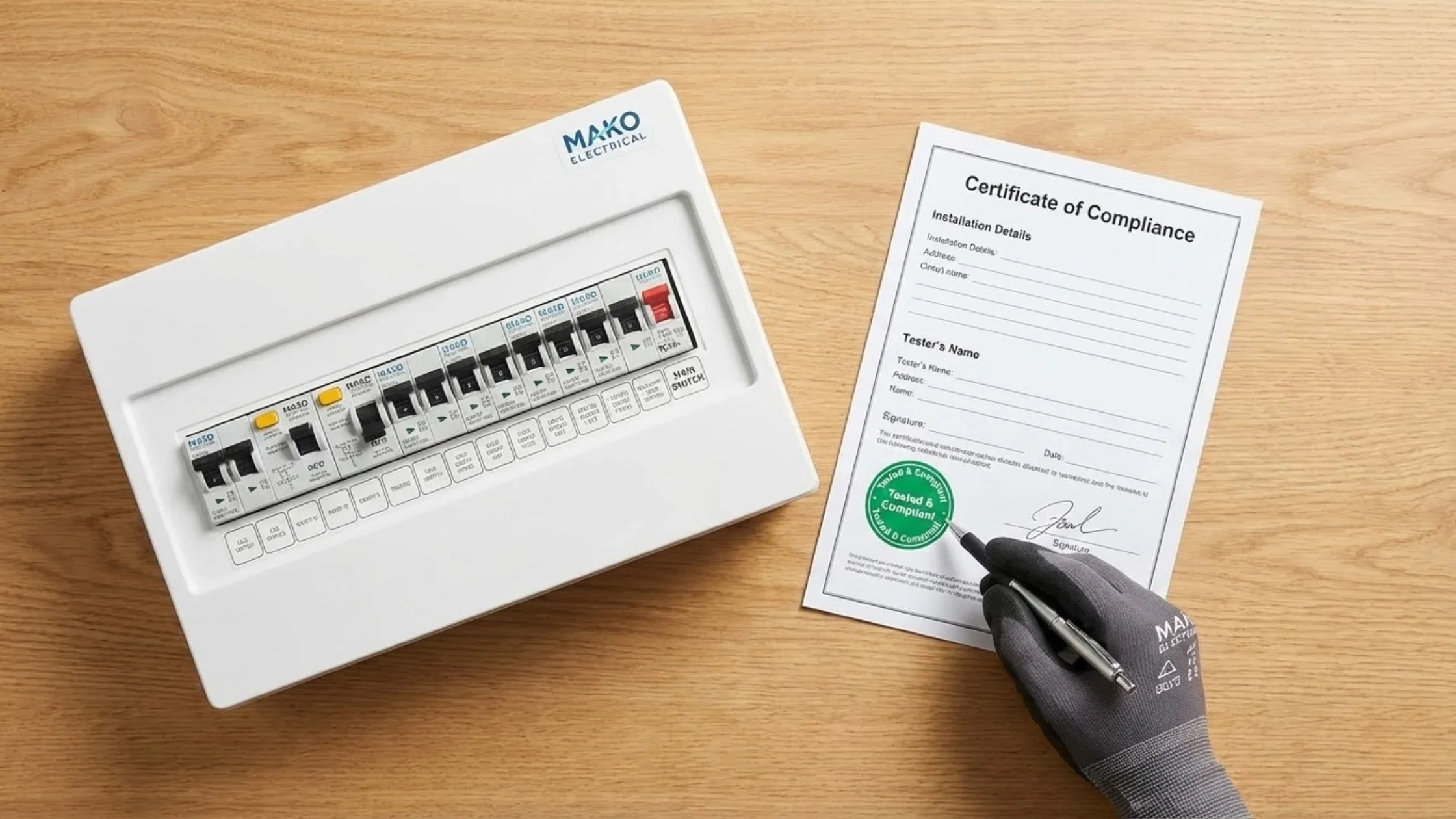
When Must an Electrician Issue a CoC?
Not every tiny job needs a full Certificate of Compliance. If we are just changing a lightbulb or replacing a broken light switch with a similar one, that is considered "maintenance" and usually doesn't require a CoC (though you might get an Electrical Safety Certificate or ESC instead).
However, you absolutely must have a CoC for:
Installing a brand-new power circuit.
Moving your switchboard or installing a new one.
Wiring a new extension or a whole new house.
Connecting large fixed appliances like an electric oven or a hot water cylinder.
If you are unsure whether your project needs one, you can check the Auckland Council guidelines or the Wellington City Council advice, as these standards apply across all of New Zealand, including our local Nelson Tasman area.
The Mako Electrical Difference: Expertise You Can Trust
When you hire an electrician, you are trusting them with your most valuable asset. As Master Electricians, Mako Electrical takes this responsibility seriously. We stay up to date with the latest Electrical CoC requirements so you don't have to worry about the technical jargon.
We make the process simple. Once the work is done, we test it, verify it, and then we generate the digital paperwork. This is then kept on record and sent to you for your files. It is a seamless part of our professional electrical services. We focus on high-quality work that meets the same high standards as international Certificates of Conformance, adapted specifically for the Kiwi home.
Protecting Your Future Today
Don't leave your home's safety to chance. If you have recently had work done and didn't receive paperwork, or if you are planning a new project in the Nelson Tasman area, talk to us. We are here to provide clear, honest, and expert advice to keep your lights on and your family safe.
Ready to get your electrical work sorted with a team you can trust? Contact Mako Electrical today for a quote or to discuss your next project. We make the "scary" legal stuff easy to understand and even easier to manage.
Frequently Asked Questions
-
A Certificate of Compliance (CoC) is a legal document that a licensed New Zealand electrician issues. It confirms that any "high-risk" or "general" electrical work—such as installing new wiring or a switchboard—has been completed according to the Electricity (Safety) Regulations 2010. It serves as proof that the work is safe, has been tested and is compliant. This document is crucial for homeowners to ensure their insurance remains valid and to provide a safety guarantee for future property sales.
-
Yes, NZ law requires it for most major electrical work. While minor repairs like replacing a light switch might need an Electrical Safety Certificate (ESC), any work that involves new circuits new appliances, or changes to the switchboard must have a Certificate of Compliance. Without this, your work remains uncertified, which can lead to legal issues, safety hazards, and the cancellation of your home insurance policy in the event of an electrical fire.
-
a registered and licensed electrical practitioner with the right qualifications can issue a Certificate of Compliance. In many cases, homeowners choose a "Master Electrician" for assurance of the highest standard of expertise. The person signing the CoC takes legal responsibility for the safety and quality of the work. You should always check that your electrician has a current license through the Electrical Workers Registration Board (EWRB) before they begin any major work on your home.
-
The cost of a Certificate of Compliance is included in the overall quote for your electrical project. It is not just a "piece of paper" but represents the time the electrician spends performing mandatory safety tests and inspections to ensure the wiring is perfect. Depending on the complexity of the job, the administrative and testing time might range from $50 to $150 as part of the total service fee. It is a small price to pay for legal safety and insurance protection.
-
If you lack a CoC for major work, you face three main risks. First, your home insurance may be voided; insurers often refuse claims for fires caused by uncertified electrical work. Second, you may face difficulties when you sell your house, as building inspectors will flag the missing paperwork. Third, and most essential, you have no guarantee that the work is safe, which puts your family at risk of electric shock or fire from faulty hidden wiring.
-
A Certificate of Compliance (CoC) is issued for the actual work done—the "doing" part. It describes what was installed and how it meets safety standards. An Electrical Safety Certificate (ESC) is issued after the CoC to confirm that the entire installation is safe to connect to the electricity supply and is "safe." Major jobs require both. For very minor maintenance, an electrician might provide an ESC to confirm that the existing system remains safe after their visit.
-
A Certificate of Compliance does not "expire" for the specific work it covers. It is a permanent record that the installation was safe and compliant at the time it was completed. However electrical systems do age over time. While the CoC remains a valid legal record for that specific project forever, homeowners should have their general wiring inspected every 10 years to ensure that wear and tear haven't created new safety issues since the certificate was issued.
-
Yes, installing a heat pump requires a new electrical circuit and a connection to your switchboard. Because this involves new high-risk wiring and a fixed appliance, your electrician must provide a Certificate of Compliance and an Electrical Safety Certificate. This confirms the unit has safe grounding and that your home's electrical system can handle the extra load. Keeping this document is essential for the heat pump's manufacturer warranty and your home insurance.
-
No, this is dangerous and often illegal. A licensed electrician cannot "sign off" on work they did not do or supervise from the beginning. The electrician must be able to verify every step of the installation to issue a CoC. If you do your own wiring, no professional can certify it afterward. This leaves you with uncertified work that can lead to insurance rejection and significant safety hazards. Hire a professional from the start.
-
Your electrician should give you a copy of the CoC as soon as the work is finished and tested. Many modern electricians, like Mako Electrical, use digital systems to store these records. If you have lost your copy, you should contact the original electrician who did the work, as they are required to keep records of the certificates they issue for several years. For very old work, there may not be a digital record, which is why it is wise to keep a physical folder.
