
How Many Power Points Does a Modern Home Need in New Zealand?
The Invisible Network: Planning Your Modern Home Power Layout
Imagine walking into your dream home in the heart of Nelson. The walls are fresh, the kitchen is gleaming, and the lighting is perfect. You go to plug in your coffee machine, only to realise the nearest socket is behind the fridge. Or worse, you’re sitting on your beautiful new sofa and have to run a messy orange extension cord across the rug just to charge your phone.
It is a common frustration that many homeowners face. When we build or renovate, we often think about the colours of the walls or the style of the taps, but we forget the most important part of a functional home: the power layout. A modern home in New Zealand needs more than just one plug in the corner of each room. We live in a world of tablets, smart vacuums, e-bikes, and home offices. If you don’t plan for these now, you will be stuck with a cable spaghetti mess later.
At Mako Electrical, we believe that power point installation NZ isn't just about drilling holes in walls. it is about designing a home that works for you. Whether you are in Richmond or the Tasman hills, a smart electrical plan makes your life easier and your home safer. This guide will show you exactly how to count your sockets and where to hide them for a sleek, modern look.
Key Takeaways
Always install double power points instead of singles to double your capacity instantly.
Place sockets near windows for easy access to festive lights or electric blinds.
Add USB-C integrated outlets in the kitchen and bedrooms to save on bulky adapters.
Don’t forget the garage; e-bikes and tools need plenty of dedicated charging spots.
Think about outdoor living areas for speakers, heaters, and fairy lights.
Why One Size Does Not Fit All
Many people ask us for a magic number. They want to know if three plugs per room is enough. The truth is that every family lives differently. A retired couple might only need a few spots for lamps and a TV. However, a young family in a new Nelson subdivision might have four iPads, two laptops, and a kitchen full of gadgets that all need juice at the same time.
Experience tells us that the biggest mistake people make is following the minimum requirements. New Zealand building standards have rules for safety, but they don't have rules for convenience. Expertise in electrical design means looking at your floor plan and living in it before the walls go up. We look at where your Christmas tree will sit, where you will vacuum the hallway, and where you might want to put a digital photo frame in five years.
The Kitchen: The Power Hub of the Home
The kitchen is the engine room of the house. Gone are the days when you just had a fridge and an oven. Now, we have air fryers, slow cookers, wine fridges, and built-in microwaves. When planning outlet installation home layouts, the kitchen needs the most attention.
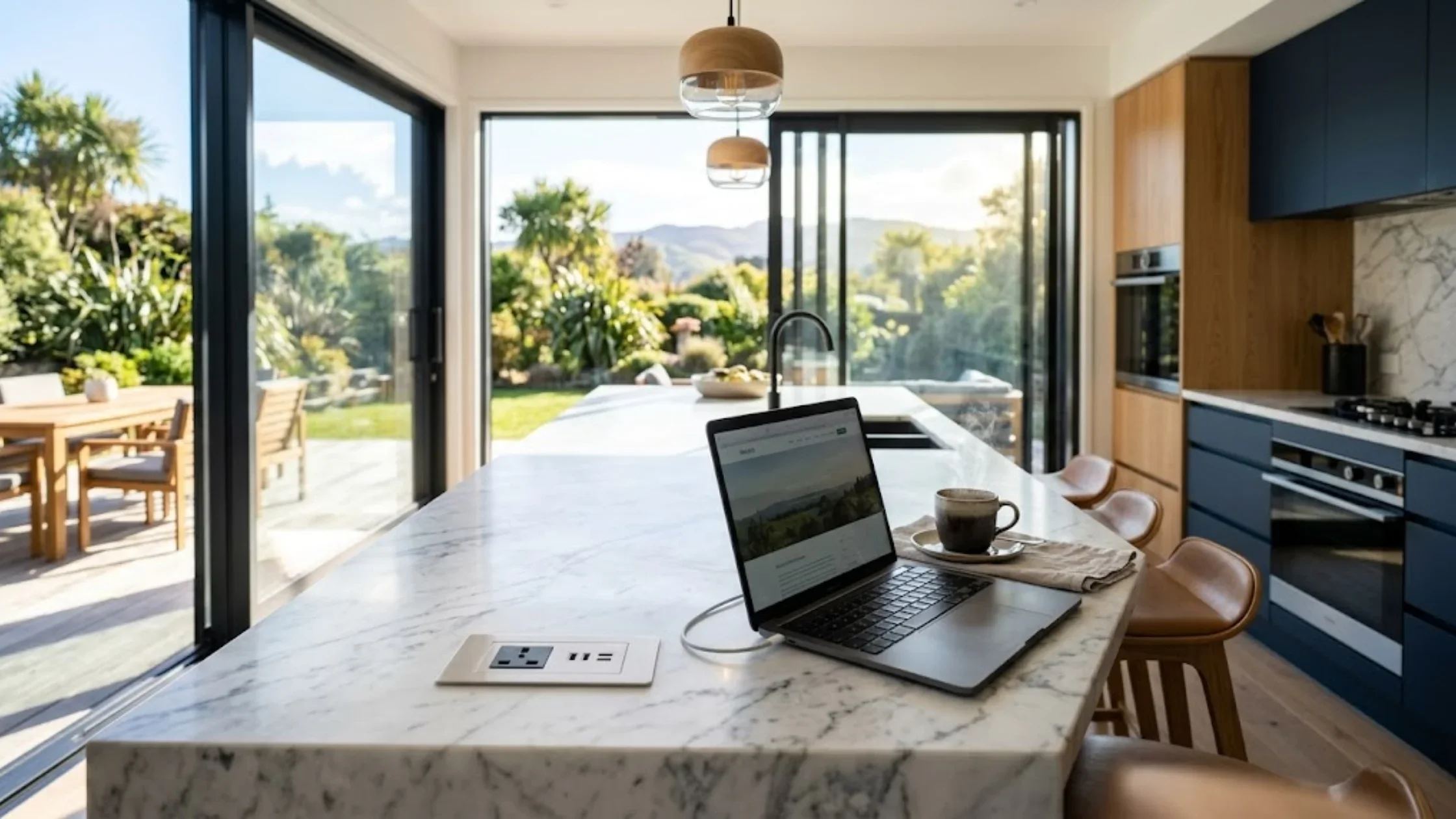
We suggest a zone approach. You need heavy-duty power for the big appliances, but you also need pop-up or hidden sockets on the kitchen island for your laptop or phone. Nothing ruins a beautiful stone benchtop like a clunky plastic socket right in the middle. Instead, we can look at clever design solutions that keep the power hidden until you need it. This keeps your kitchen looking tidy while remaining fully functional.
Living Spaces and the Hidden Tech Trend
In your lounge, the focus should be on relaxation, not hunting for a charger. Modern furniture often covers up the sockets we use most. This is where professional electrical layout tips become vital. We recommend placing sockets at different heights. Some should be low for your TV and sound system, while others should be tucked inside cabinets to keep your internet router and gaming consoles out of sight.
In Nelson Tasman homes, we also see a big rise in heat pumps and smart home hubs. These need dedicated power spots that don't take away from your everyday plugs. Think about your future needs too. Maybe you don’t have a motorized blind system now, but having a power point near the top of the window frame today saves you a huge amount of money and mess in the future.

Bedrooms: More Than Just a Bedside Lamp
We spend a third of our lives in the bedroom, yet it is often the most under-powered room in the house. A single power point behind the bed is no longer enough. Most people now use their phones as alarm clocks, which means they need a USB charging port right next to the pillow.
We suggest installing half-height outlets that sit just above your bedside table. This stops you from having to move heavy furniture every time you need to plug something in. Also, don't forget the beauty station. If you have a dressing table, you’ll need spots for hair straighteners and lighted mirrors. Planning these details now is what separates a standard house from a truly comfortable home.
Trusting the Local Experts
Choosing the right team for your residential electrical services Nelson is about more than just getting the lights to turn on. At Mako Electrical, we have spent years working in local homes, understanding the unique needs of Tasman residents. We know which products last in our coastal environment and which ones fail. When we walk through a project, we don't just ask where you want a plug; we ask how you use your space. This proactive approach prevents the I wish I’d put a plug there feeling six months after the job is done. From simple power point outlet installation Nelson Tasman to full-scale renovations, we bring our expertise to every wire we pull.
Taking the Next Step
Planning your electrical layout shouldn't be stressful. It should be an exciting part of making your home your own. If you are ready to stop using power boards and start enjoying a seamless, high-tech home, it is time to talk to a professional.
Don't settle for a standard when you can be perfect. Whether you are building from scratch or just tired of your old, dusty sockets, we are here to help. Our team can guide you through the latest trends in electrical design and ensure your home is ready for whatever the future brings.
Ready to power up your home? Get in touch with Mako Electrical today for a friendly chat about your project. Let’s make your Nelson home the smartest on the block!
Frequently Asked Questions
-
In a modern New Zealand home, we recommend at least three double power points per bedroom. Ideally, place one on either side of the bed at bedside table height and one on an opposite wall for a vacuum or television. This prevents the need for extension cords and ensures you can charge devices easily while keeping a clear walkway.
-
Adding outlets is much more affordable when walls are open during a renovation. The cost usually covers the socket itself, the cabling, and the labour. It is a smart investment because it increases the home's value and safety. At Mako Electrical, we provide clear quotes so you can plan your budget without any hidden surprises or extra costs later on.
-
No, in New Zealand, most electrical work must be done by a registered electrician to comply with the law and insurance requirements. Doing it yourself is dangerous and can void your home insurance. Hiring a professional like Mako Electrical ensures the work is safe, tested, and comes with an electrical safety certificate for your peace of mind.
-
For a home office, you should look for quad power points (four sockets in one) and outlets with built-in USB-A and USB-C ports. This allows you to plug in your computer, monitor, and printer while charging your phone and tablet without needing extra bulky wall adapters. It keeps your workspace looking professional and very tidy.
-
Standard heights are usually 300mm from the floor, but modern placement often changes based on use. For example, kitchen bench outlets are usually 100mm above the surface, and bedside outlets are set to match your furniture height. We customise the height to suit your specific lifestyle needs and the physical layout of your furniture.
-
Yes, outdoor outlets must be weather-protected with an IP (Ingress Protection) rating. These sockets have covers to keep out rain and dust, preventing short circuits. They are perfect for outdoor heaters, electric BBQs, or garden lighting. We ensure all outdoor installations meet NZ safety standards to handle Nelson’s coastal weather conditions.
-
A USB-C power point has a small port built directly into the wall plate. Since most new iPhones, Samsungs, and laptops now use USB-C cables, these outlets allow you to plug your cable directly into the wall. This saves space and often charges your devices faster than a standard plug-in brick, making your home feel much more modern.
-
If your outlets feel warm to the touch, have brown scorch marks, make a buzzing sound, or if plugs fit loosely, they are unsafe. Old bakelite sockets or those without a grounding wire are fire risks. If you live in an older Nelson home, we can perform a quick safety check to see if your wiring needs an upgrade for your family's safety.
-
Yes, putting sockets inside cupboards is a great way to hide clutter appliances. This is perfect for charging cordless vacuums, hiding the microwave, or keeping a printer out of sight. Our team can safely wire these internal sockets to ensure they have enough ventilation and meet all New Zealand electrical safety regulations.
-
Smart power points connect to your home's Wi-Fi. They allow you to turn off appliances using your phone or set timers for things like lamps or heaters. This is a great way to save money on your power bill and make sure the iron isn't left on when you leave the house. They are a popular choice for modern Nelson renovations.
