
Identifying 'Asbestos' Backing Boards in Old Switchboards
Is Your Nelson Home Hiding a Secret? The Truth About Asbestos Backing Boards
If you live in a beautiful 1950s, 60s, or 70s home in Nelson or Tasman, you likely love the character, the solid bones, and the history of your property. However, behind that small wooden door in your hallway or laundry, there might be a silent safety risk that many homeowners completely overlook.
Most people know that asbestos can be found in old roofing or textured ceilings, but did you know it was a "wonder material" for Victorian and mid-century electricians? For decades, heavy black or dark brown panels were used to mount electrical meters and fuses. These boards were sturdy and fire-resistant, but today, they represent a significant hazard. Understanding what is sitting in your switchboard isn't just about home maintenance; it is about keeping your family safe.
Key Takeaways for Homeowners
Asbestos was commonly used in NZ switchboards from the 1950s to the late 1970s.
Identifying "Zelemite" or "Ausbestos" boards is the first step to a safer home.
Old boards are often linked to outdated wiring that lacks modern safety switches.
Never drill, sand, or DIY near an old black backing board.
Professional switchboard upgrades in Nelson are the only permanent solution.
What Exactly Is an Asbestos Backing Board?
Back in the day, manufacturers created composite materials known by brand names like Zelemite, Lebah, or Ausbestos. These were made by mixing asbestos fibres with bitumen or resin. The result was a hard, coal-black panel that didn't catch fire easily—which sounds great for electricity, right?
The problem occurs as these boards age. Over forty or fifty years, the material can become brittle. If you decide to hang a picture nearby and vibrate the wall, or if a tradesman drills a hole to add a new power point, those tiny asbestos fibres can break loose into the air. In the Nelson Tasman region, where we love renovating our older villas and bungalows, this is where the danger usually starts. You can learn more about where these materials hide from WorkSafe NZ.
How to Spot the Danger in Your Home
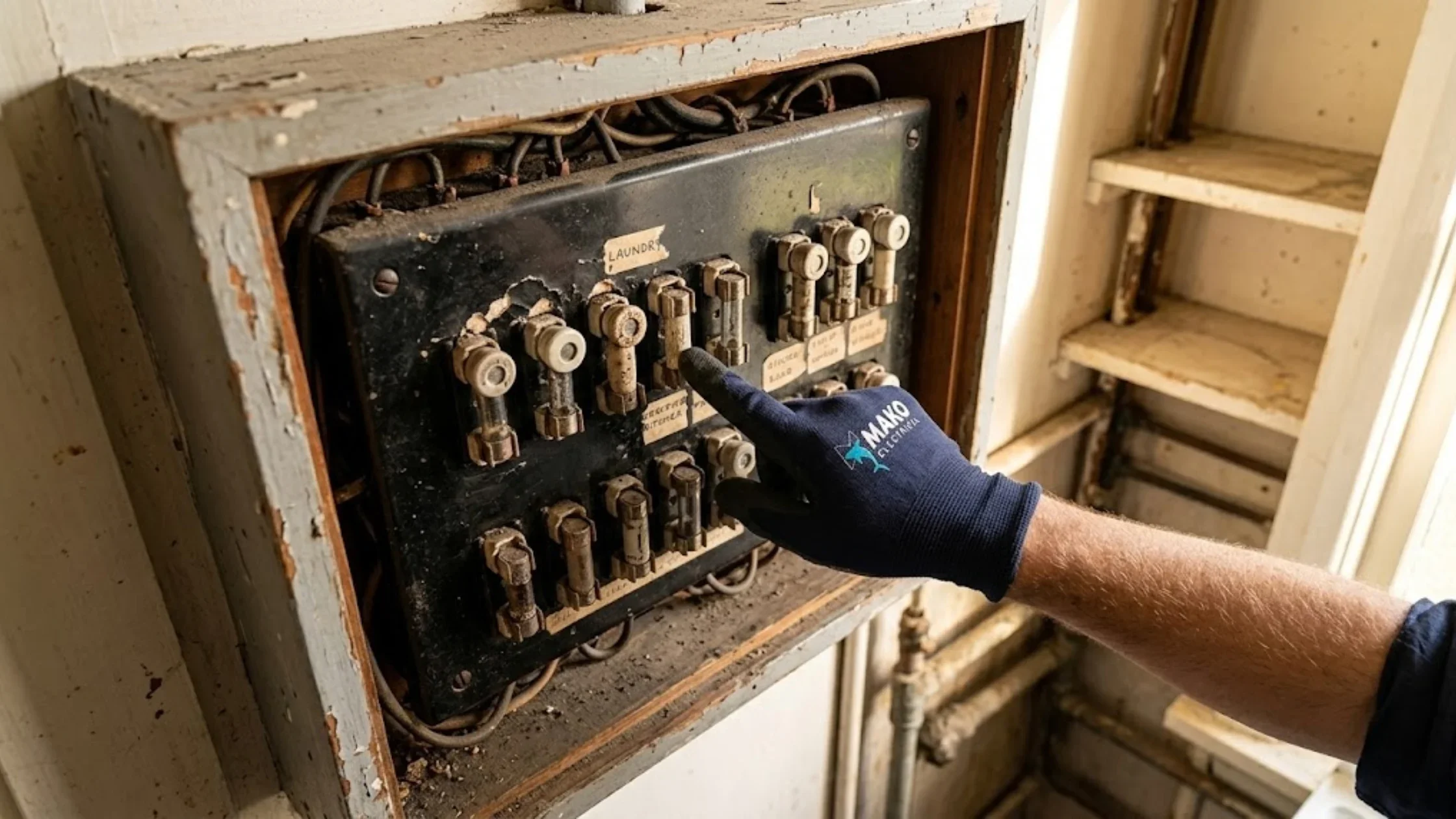
Identifying these boards takes a bit of "detective work," but you should never touch the board itself. Look for a deep black or very dark brown colour with a dull, matte finish. Often, these boards have a distinct "bitumen" or tar-like smell if they get warm.
If you see old-fashioned ceramic "re-wirable" fuses—the kind where you have to wrap a piece of wire around two screws—there is a very high chance the backing board contains asbestos. Many Nelson homes built during the post-war housing boom still rely on these original setups. While they have worked for years, they were never designed to handle the load of modern heat pumps, EVs, and induction cooktops. For more visual guides on spotting these materials, Ambient Construction offers great insights into local NZ housing risks.
Why "Wait and See" is a Risky Strategy
The danger of an asbestos backing board isn't just the fibres; it's the technology it holds. If you have an old board, you likely don't have RCDs (Residual Current Devices). These are the modern life-savers that flick the power off in a millisecond if someone gets a shock or a wire shorts out.
Old boards are prone to "arcing," where electricity jumps across gaps. Because the board contains asbestos, any small electrical fire or overheating can release toxic dust into your home’s air vents or hallway. It is a double-whammy of fire risk and health risk. This is why Mako Electrical focuses so heavily on helping families transition to modern, safe systems.
The Path to a Safer Nelson Home
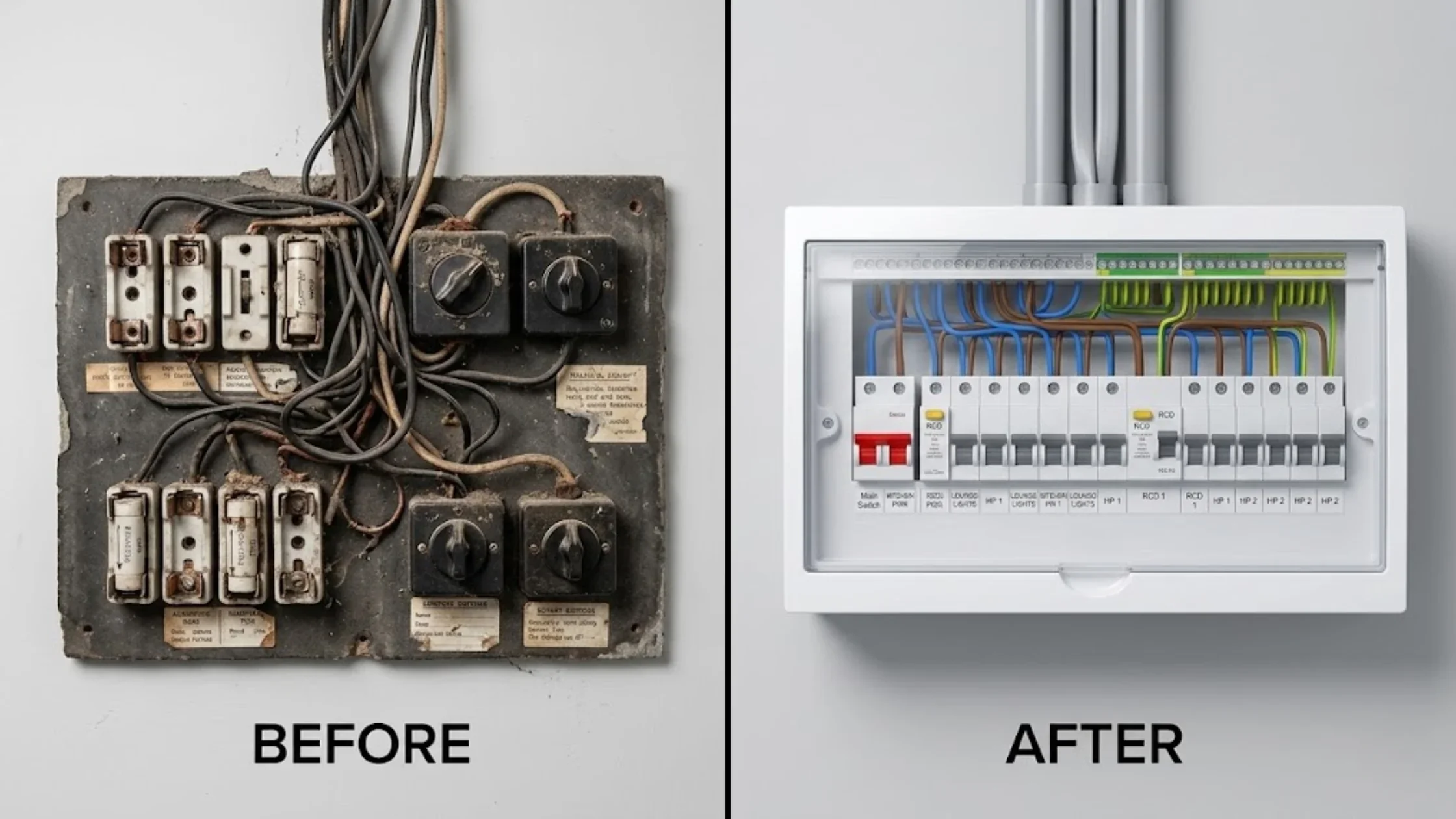
The good news is that solving this problem is straightforward. You don't have to live in fear of your switchboard. A professional upgrade involves carefully removing the old hazardous board using specific safety protocols and replacing it with a modern, fire-resistant plastic or metal enclosure filled with high-tech circuit breakers.
When you upgrade, you aren't just removing a hazard; you are "future-proofing" your home. You’ll be able to run your appliances without blowing fuses, and you gain the peace of mind that comes with modern safety switches. You can explore the full range of electrical services available to keep your property up to New Zealand standards.
Taking Action Today
Safety is about being proactive. If your home was built between 1950 and 1980, take a peek at your switchboard today. If it’s black, dusty, or uses ceramic fuses, it’s time to talk to a professional. Don't risk a DIY approach with materials this sensitive.
At Mako Electrical, we live and work in the Nelson Tasman community. we know the local housing stock and we know exactly how to handle these old boards safely and efficiently. Let’s make your home the safe haven it’s meant to be.
Ready to clear the air? Contact Mako Electrical today for a professional safety check and a quote on a modern switchboard upgrade.
Frequently Asked Questions
-
In New Zealand homes built before 1985 black or dark brown mounting Harris-boards (often called Zelemite) contain asbestos. These boards look like hard plastic or wood but are very heavy and dark. If your switchboard has old ceramic "pull-out" fuses rather than modern "flip" switches, asbestos is present. You can often see a brand name like "Zelemite" or "Ausbestos" printed on the back, but you should never unscrew the board to check this yourself. A licensed electrician can identify the material during a routine inspection without disturbing the fibres.
-
In most cases, if the board is in good condition and left undisturbed, the risk is low because the asbestos fibres are "bonded" in bitumen. Keep in mind, the danger increases significantly if the board is old, crumbling, or if someone attempts to drill into it to add new circuits. Because these boards are located where electrical heat is generated, they can become brittle over time. Any vibration or DIY work nearby can release microscopic fibres into your home's air. It is always safer to have it replaced by a professional who uses correct dust-extraction tools.
-
No, you should never attempt to remove or work on an asbestos backing board yourself. In New Zealand strict regulations govern the handling of asbestos. Because the board connects to the main electricity supply, it requires a registered electrician to disconnect the power . On top of that, removing the board requires specific safety gear and disposal methods to ensure toxic dust doesn't contaminate your home. Professionals use "H-Class" vacuums and wet-wiping techniques to ensure your family remains safe during and after the removal process.
-
Zelemite was a popular brand of electrical mounting board used throughout the mid-20th century. It was made from a mixture of asbestos fibres and a binder like bitumen or phenolic resin. It was the industry standard because it was an excellent electrical insulator and was resistant to heat and fire. While it performed its job well for decades, we now know that the asbestos fibres used in its construction pose a serious health risk if they are inhaled, which leads to long-term lung issues.
-
The cost of a switchboard upgrade in the Nelson Tasman region varies depending on the size of your home and the complexity of your current wiring. A standard residential upgrade involves removing the asbestos board, installing a new compliant enclosure, and adding modern RCDs and circuit breakers. While it is an investment, it adds significant value to your home and is often a requirement for modern home insurance policies. Contacting a local expert like Mako Electrical for a site-specific quote is the best way to get an accurate price.
-
Standard home insurance does not cover the "maintenance" cost of replacing an old switchboard just because it has asbestos in it. However many insurance companies now require homes to have modern switchboards with RCDs before they will provide full cover or lower premiums. If an old switchboard causes a fire and you find it to be poorly maintained or non-compliant, this could complicate your claim. Upgrading is seen as an essential safety improvement that protects your property and your policy.
-
A modern switchboard provides three main benefits: safety, capacity, and convenience. First, it includes RCDs that protect your family from fatal electric shocks. Second, it allows your home to handle modern power demands from devices like Tesla chargers or large heat pumps without tripping fuses. Third, it replaces old-fashioned fuse wire with simple "flip" switches making it easy to restore power if a fault occurs. It removes the hidden health hazard of asbestos from your living environment.
-
Ceramic fuses are outdated because they do not "trip" fast enough to prevent a serious electric shock. They are designed to protect the wires from catching fire, but they won't save a person. Also many people use the wrong thickness of fuse wire when a fuse blows, which creates a massive fire risk. Modern circuit breakers are much more sensitive and accurate shutting off the power in a fraction of a second if any irregularity is detected in the circuit.
-
A professional electrician will not refuse to work on your home, but they will follow strict safety protocols. Many will recommend a full switchboard upgrade rather than trying to "patch" an old asbestos board. This is because drilling into the old board to add a new circuit poses a hazard to the worker and the homeowner. Most reputable contractors in Nelson will insist on a replacement to ensure the job meets current New Zealand Safety Standards (AS/NZS 3000).
-
A typical residential switchboard upgrade takes between 4 to 8 hours to complete. During this time, the power to your home will need to be turned off. A licensed electrician will remove the old hazardous board, mount the new unit wire in the new breakers and—most —test every circuit in the house to ensure they are grounded and safe. Once the work is done, you will receive a Certificate of Compliance (CoC), which is an essential document for your home records and insurance.
