
Why Do My Breakers Trip When It Rains?

Why Your Power Cuts Out When Nelson Rains Start
It is a classic Nelson evening. You are settled in, perhaps listening to the first proper autumn rain of March drumming on the roof, when suddenly—click. The house goes dark, or the kitchen sockets stop working. You head to the switchboard, flip the blue or black lever back up, and a few minutes later, it trips again.
If your circuit breaker only seems to have a "personality" when it’s wet outside, you aren’t alone. For many homeowners in the Nelson Tasman region, the transition from a dry summer to a damp autumn acts as a giant leak-detector for your electrical system. While it is frustrating, that tripping switch is actually doing its job: protecting your home from a potential fire or electrical shock.
At Mako Electrical, we see this every time the seasons shift. Usually, the culprit isn't a ghost in the machine; it’s moisture finding its way into your outdoor lights or power points. Understanding why this happens—and how to stop it—is the first step toward a worry-free, dry winter.
Key Takeaways
Safety First: A tripping breaker is a safety feature, not just an annoyance.
Common Culprits: Outdoor lights, faulty power point seals, and blocked gutters are leading causes.
The Nelson Factor: March rains often highlight wear and tear from the summer sun.
Professional Help: Tracking "earth leaks" requires specialized tools and expertise.
The Science of Water and Electricity
To understand why your power cuts out, we have to look at how your home stays safe. Most modern New Zealand homes use Residual Current Devices (RCDs). These are incredibly sensitive switches that monitor the flow of electricity. If the RCD notices even a tiny amount of electricity "leaking" out of the wires—perhaps through a droplet of water—it shuts off the power in milliseconds.
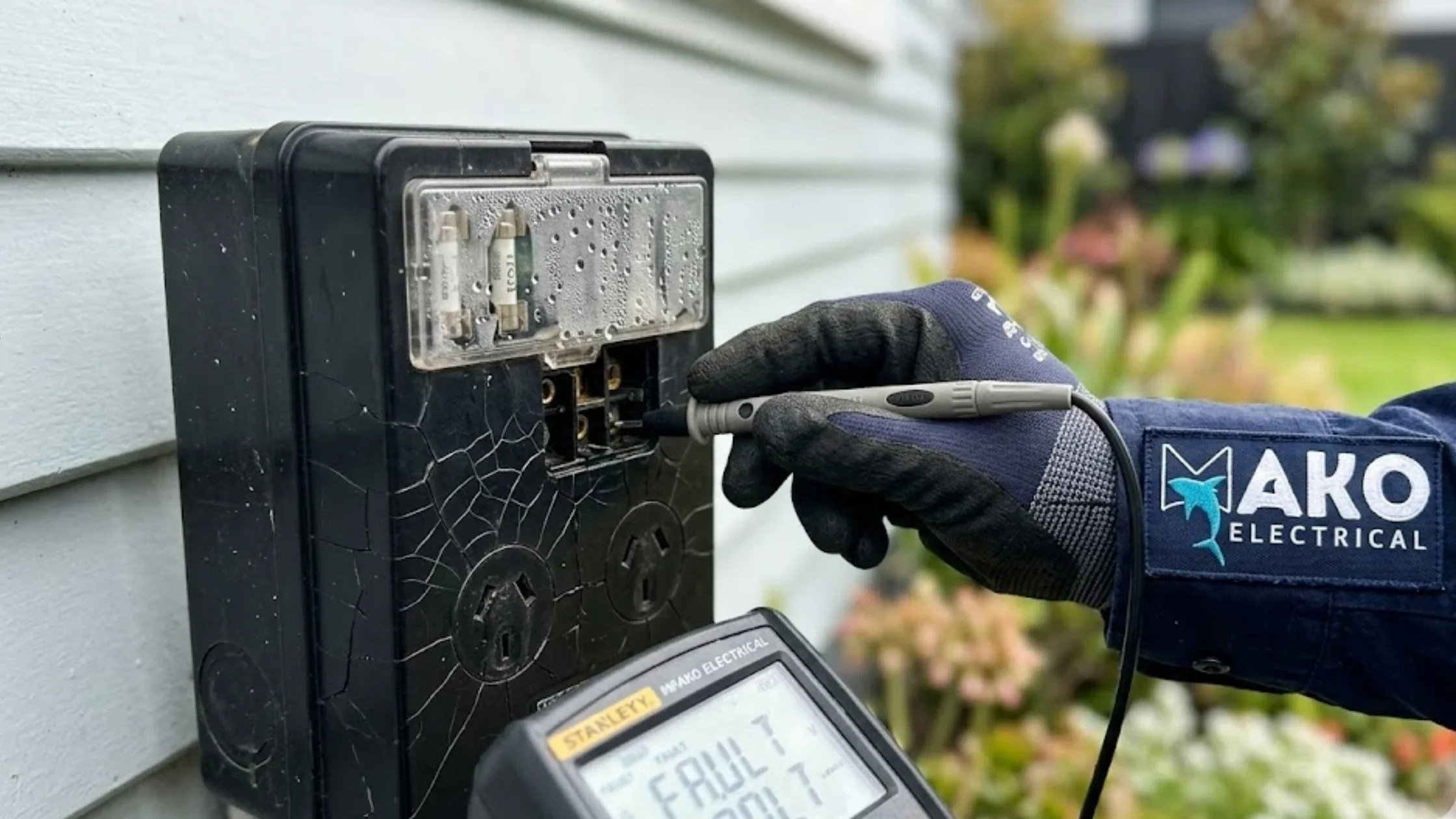
Water is a fantastic conductor of electricity. When rain gets into an outdoor fitting, it creates a bridge between the live wires and the metal casing or the ground. This is what we call an outdoor electrical fault. Because water is sneaky, it can enter a light fixture on the north side of your house and trip a circuit that affects your entire lounge.
Why March is the Tipping Point in Nelson
Nelson is famous for its sunshine, but our high UV levels are tough on building materials. During the long, hot summer, the rubber seals on your outdoor power points and the plastic casings of your garden lights can bake, crack, and become brittle.
When the first autumn rains arrive in March, these tiny, invisible cracks become entry points for moisture. What was a "sealed" light unit in January is now a collection bucket in March. This is why you might notice your circuit breaker trips when it rains for the first time in months. It is the environment testing the integrity of your external electrical fittings.
Troubleshooting Moisture Ingress: Where to Look
If you are dealing with a recurring trip, you can do some basic "detective work" before calling in the experts. Start by looking at your outdoor zones. Check your garden path lights, your patio heat lamps, and especially those power points tucked away behind the BBQ.
The Visual Inspection: Look for "fogging" or water droplets inside the glass covers of your outdoor lights. If you see condensation, moisture has already won the battle.
The Power Point Check: Ensure the "shrouds" or weatherproof covers on your outdoor sockets are snapping shut properly. Sometimes, a spider web or a bit of dirt can prevent a perfect seal, allowing damp air to settle inside.
Gutters and Spouting: It sounds like a job for a builder, but overflowing gutters often spill water directly onto outdoor sensors or wall lights that weren't designed to handle a waterfall.
Why "DIY" Isn't the Answer for Damp Electrics
It is tempting to try and dry out a socket with a hairdryer or wrap a light in plastic, but moisture in an electrical circuit is a serious hazard. If an RCD is tripping, it means there is a genuine risk of electrocution.
At Mako Electrical, we use specialized insulation resistance testers to find the exact point of the leak. Often, the problem isn't where you think it is. Moisture can travel down the inside of a cable (a process called "wicking") and cause a fault several metres away from the actual leak. By hiring a local Nelson Tasman professional, you ensure the repair meets NZ Electrical Standards, keeping your insurance valid and your family safe.
Preventing Future Faults
The best way to handle rain-related power cuts is to stay ahead of them. We recommend a quick "Autumn Audit" of your exterior electrics. This involves checking the seals on all outdoor fittings and upgrading old, weathered lights to modern IP65-rated (weatherproof) versions.
Investing in high-quality outdoor hardware pays for itself the first time a storm rolls through and your lights stay on. If you are planning to add new garden lighting or need an expert to find that pesky "earth leak," the team at Mako Electrical is ready to help. We know the Nelson climate and we know how to keep it outside where it belongs.
Frequently Asked Questions
-
Yes, it indicates a "ground fault" or "earth leak." While the breaker is doing its job by cutting power, the underlying issue means electricity is escaping its intended path, which poses a risk of fire or electric shock if someone touches a damp appliance or surface.
-
You can try once, but if it trips again immediately, do not force it. Repeatedly resetting a breaker into a "hard fault" caused by water can damage your switchboard and increase the risk of an electrical fire.
-
Over time, UV rays from the sun degrade rubber gaskets and plastic housings. Temperature changes also cause materials to expand and contract, eventually creating tiny gaps that allow humid air and rainwater to seep inside.
-
Most homes have their outdoor lights and power points connected to the same RCD (safety switch) as some of their indoor circuits. A fault outside travels back to the switchboard, which shuts down the entire loop to keep you safe.
-
It depends on the airflow, but it can take days for moisture trapped inside a conduit or socket to evaporate on its own. It is much safer and faster to have an electrician open, dry, and reseal the unit.
-
Absolutely. If gutters overflow, water often runs down the side of the house and directly into outdoor lights, sensors, or power points that are only designed to handle vertical rain, not a heavy flow of water.
-
Not necessarily. Most of the time, the issue is a specific appliance or outdoor fitting. However, if your switchboard is very old and lacks RCD protection, we highly recommend an upgrade for modern safety.
-
Unplug any outdoor appliances and turn off outdoor light switches. If the breaker still trips, the fault is likely in the permanent wiring, and you should call a registered electrician immediately.
-
Yes, look for an "IP Rating" (Ingress Protection). For Nelson's coastal and occasionally high-rainfall environment, we recommend at least IP65 for any lights fully exposed to the elements.
-
Most faults can be found and fixed within an hour or two. It is a small price to pay for the safety of your home and the convenience of having reliable power.
