
Does Your Nelson Home Need Rewiring Before Winter? Key Warning Signs to Watch For

Winter is arriving quickly in the beautiful Nelson Tasman region. The morning air is getting very cold, and thick frost is starting to cover the grass in Richmond, Stoke, and the local hills. When the temperature drops fast, we all want our homes to feel warm, safe, and cozy. You probably walk inside, turn on your powerful heat pump, plug in your electric blanket, and switch on the kitchen kettle to make a hot drink. It feels wonderful to escape the outdoor chill. However, have you ever stopped to think about what is happening inside your house walls?
Deep inside the walls of many older local properties, a silent danger is waiting. Old electrical systems were simply not built to handle the massive power demands of a modern New Zealand winter. When you turn on multiple heating appliances at the exact same time, you put an enormous amount of stress on your electrical wires. If those wires are old, weak, or damaged, they can overheat very quickly. This can lead to sudden power failures or even dangerous house fires. Keeping your family warm during the coldest months of the year should never mean putting your home at risk. It is very important to learn how to spot the early trouble signs so you can protect the people you love.
Understanding your home's electrical health is the best way to prevent a major emergency. Many houses in our region possess wonderful historical character, but their hidden wires are desperately crying for help. Let us take a close look at why winter creates such a big challenge for older properties and explore the major warning signs that show your home needs urgent attention.
Key Takeaways
Older homes were designed for very low power use and cannot easily handle modern winter heaters.
Flickering lights and frequently tripping breakers are major signs of a struggling electrical system.
Burning smells or warm plastic wall plugs mean you have a serious electrical emergency.
Modern house rewiring keeps your family safe, protects your appliances, and secures your home insurance.
Why Older Electrical Systems Struggle in the Cold Months
Our local neighbourhood is famous for its stunning historic villas and lovely character bungalows. We love the high ceilings and beautiful timber work of these classic properties. However, the hidden electrical systems inside them belong to a completely different era. Several decades ago, a typical family only needed electricity to run a few simple lightbulbs, a small radio, and perhaps a single refrigerator. The original builders never imagined a world filled with high-powered air fryers, fast electric kettles, multi-room heat pumps, and modern computers.
When winter hits the region, our daily power consumption shoots up instantly. We rely heavily on electricity to stay comfortable. When you run a heat pump upstairs, an oil heater in the bedroom, a clothes dryer in the laundry, and a heated towel rail in the bathroom all at once, you are asking your old wires to do a giant amount of heavy lifting.
Think of your home's electrical wires like small water pipes. If you try to force a huge wave of water through a tiny, old pipe, the pressure becomes too high. In an electrical system, this extra pressure turns into intense heat. Modern homes use tough, plastic-coated wires that can handle large loads safely. Older homes often still contain old types of wiring like Tough Rubber Sheathed (TRS) cables or vintage conduit systems. Over many decades, the protective rubber or fabric coating on these old wires becomes very dry and brittle. It starts to crack, crumble away, and fall off completely, leaving bare electrical wires totally exposed behind your walls.
When bare live wires lose their protective coating, they can easily touch each other or come into contact with dry wooden house framing. This creates a massive hazard. The risk becomes much higher in winter because the wires stay hot for hours at a time as your heating runs continuously. This is why a professional house rewiring is so important for older properties before the true winter cold settles in.
Critical Warning Signs You Need to Watch For
Fortunately, your electrical system will usually try to warn you before it fails completely. You just need to know exactly what to look for and what to listen for. If you notice any of the following problems in your home, you should not ignore them. They are clear signals that your electrical system is under too much stress.
Flickering or Dimming Lights
Have you ever noticed your living room lights go dim for a second when your heat pump clicks on? Or maybe the kitchen lights flicker slightly whenever someone uses the microwave or the toaster. This happens because your current electrical circuits do not have enough power to share among all your appliances. The heavy heating equipment is stealing power away from your light bulbs. This is a very common sign that your old wiring is struggling to cope with your basic daily needs.
Circuit Breakers Tripping Often
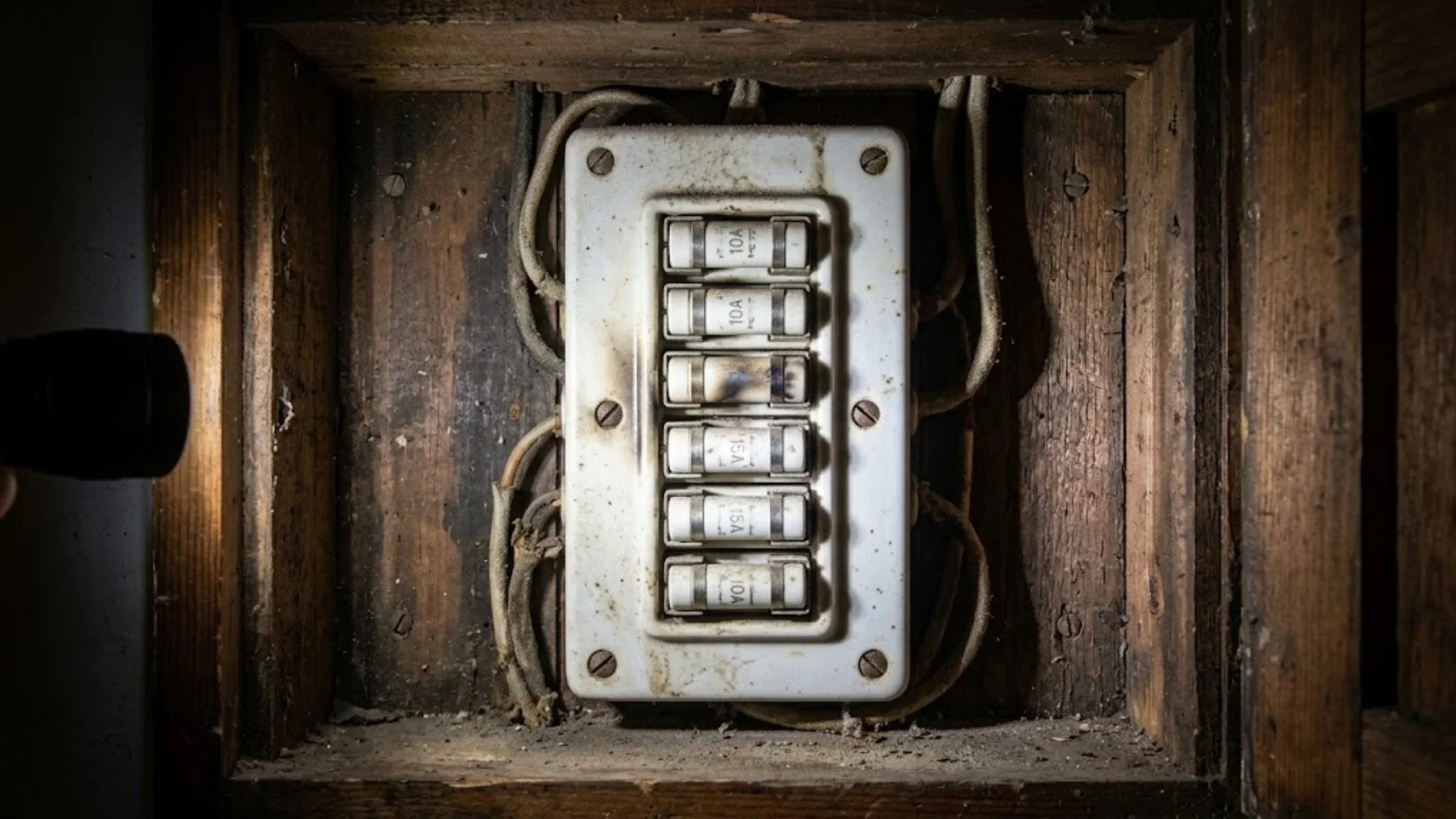
Your home switchboard is the brain of your electrical system. It is designed to shut off the power automatically if a circuit gets too hot or overloaded. If you have to walk outside to the switchboard box regularly to flip a switch back on, your system is telling you something important. It means you are plugging in more load than the old wires can safely carry. If your home still uses old-fashioned ceramic fuse boxes with thin fuse wire, this is even more dangerous. Those old fuses do not always cut the power fast enough to prevent a serious fire.
Warm or Discoloured Wall Plugs
This is a sign that requires immediate action. Walk around your house and safely touch your plastic wall outlets and switch plates. They should always feel completely cool to the touch. If an outlet feels warm or hot, it means the wires behind it are overheating badly. You should also look closely for any brown, black, or grey scorch marks on the plastic exterior. If you see discoloration, it means electricity is jumping across loose connections and melting the plastic.
A Strange Fishy or Burning Smell
An electrical burn has a very specific, unpleasant smell. It often smells like melting plastic, or strangely, like rotten fish. If you notice a weird odor in a specific room but cannot find the source, it could be coming from inside your walls or light fixtures. This means the insulation coating on your wires is actively melting due to high heat. This is an extreme emergency, and you should contact a professional electrician right away.
Small Shocks and Sparking
When you plug an appliance into the wall, you should never see a bright spark jump out of the socket. You should also never feel a tiny zap or tingling sensation when you touch a household appliance or a metal switch. Feeling a shock means electricity is escaping from the wires and travelling onto surfaces you touch. This indicates a major fault with your earthing system or a breakdown in your wire insulation.
The Great Benefits of Getting Your House Rewired
Deciding to invest in upgrading your property is a big step, but it brings massive long-term rewards and absolute peace of mind. The most important benefit is the total safety of your family. Once your home has been properly updated with modern materials, the risk of an accidental electrical fire drops to almost zero. You can sleep soundly through those freezing winter nights knowing that your heating systems are running safely.
Another huge benefit is that you can use all your modern appliances whenever you like without any worry. You will not have to play a guessing game about which heaters can be turned on at the same time. Your new system will provide clean, steady, and reliable power to every single room. This also protects your expensive modern electronics, like smart televisions and computers, from being damaged by sudden power drops or unexpected voltage surges.
A complete upgrade also adds significant financial value to your property. If you ever decide to sell your home in the future, smart buyers will always ask about the status of the electrical system. Having a certified, fully updated house is a massive selling point that makes your property much more attractive.
Finally, upgrading your property secures your crucial home insurance policy. Many insurance companies in New Zealand now ask strict questions about the age and type of wiring inside older homes. Some companies may refuse to renew your cover or might decline a claim if they discover your property still contains dangerous, outdated wiring. Taking action early ensures your home remains fully insured and completely compliant with modern safety laws.
Why You Can Trust Mako Electrical for Your Home
When it comes to something as vital as electrical safety, you need to work with experienced professionals who truly understand the local area. The friendly team at Mako Electrical are fully licensed Master Electricians who have spent years working inside the unique character homes found throughout the region. They have seen every kind of old wiring system imaginable and know exactly how to update them cleanly and safely.
The team prides itself on providing top-quality workmanship and honest, dependable advice. They do not use complicated jargon or confusing terms. Instead, they will sit down with you, explain exactly what your home needs in plain language, and provide a clear, fair plan. They understand that a major project can feel overwhelming, so they work hard to make the entire process as smooth and stress-free as possible for your household.
Every single job completed by the team follows the highest New Zealand safety standards. They treat your property with the utmost respect, working efficiently to minimize disruption and leaving your living spaces clean and tidy when the job is done. When you choose a local expert, you are choosing long-term reliability and a safer future for your household.
Take Action and Protect Your Home Today
Do not wait for the freezing winter weather to cause a sudden breakdown in your electrical system. Finding yourself stuck in the dark without heating on a frosty night is an unpleasant experience that can easily be avoided. Taking a proactive approach today will save you money, time, and stress later on.
If your property is more than forty years old, or if you have noticed any of the warning signs discussed in this guide, now is the perfect time to act. Get in touch with the friendly team at Mako Electrical to discuss your needs. You can easily book an expert safety inspection to find out exactly what is happening behind your walls.
Visit their website to explore their full range of residential electrical services or check out their helpful online electrical warning signs guide to read more helpful tips. If you are ready to secure your home for the cold months ahead, simply go to their contact Mako Electrical page today to send a message or request a reliable, transparent quote. Let the local experts keep your home warm, dry, and safe this winter.
Frequently Asked Questions
-
You will know your home needs an upgrade if you notice constant warning signs. These include flickering lights when you use appliances, wall plugs that feel warm to the touch, or frequent power cuts caused by blown fuses. If your property was built before 1980 and still uses an old wooden fuse box with ceramic fuses, it is highly likely that your home requires a full electrical update to remain safe.
-
Yes, you can usually stay in your property during the upgrade process, but it requires good planning. Electricians work systematically room by room, which means certain areas will lose power temporarily during the day. The professional team works hard to keep your power running to essential areas like your kitchen and fridge each evening so your daily life is disrupted as little as possible.
-
A standard upgrade for a typical three-bedroom home usually takes between five to ten working days to complete fully. The exact time depends on the size of your property, how easy it is to access the spaces under your floorboards and inside your ceiling, and the specific building materials used in your walls. A professional team will always provide a clear time estimate before starting the work.
-
Modern electrical teams use advanced tools and clever techniques to feed new cables through existing wall spaces with minimal disruption. While some small holes may occasionally be required to reach tricky areas, a professional team always works cleanly. They tidy up their workspace at the end of every single day and make sure your home is kept as neat and comfortable as possible.
-
Older homes experience more electrical failures in winter because household power use increases dramatically. Families turn on large heating appliances like heat pumps, oil heaters, and electric blankets all at the same time. Vintage wiring systems were simply never designed to carry this much electricity, causing the weak components to overheat, trip the breakers, or fail entirely under the extra strain.
-
Many New Zealand insurance companies will not cover damage caused by ancient, unsafe wiring if they find out you knew about the problem. Some companies will ask you to get a professional safety certificate or complete a full electrical upgrade before they will agree to renew your policy. It is always best to update your system early to ensure your insurance protection remains fully valid.
-
The total investment for an electrical upgrade varies depending on the size of your property, the ease of access under the floors, and the number of light switches and power plugs you want to install. Because every house is completely unique, an expert team will need to visit your property to carry out a physical inspection before providing an accurate, fixed-price quote for the work.
-
Old Tough Rubber Sheathed cables use a natural rubber coating that dries out, cracks, and crumbles away over time, leaving dangerous bare wires exposed. Modern cables are insulated with heavy-duty plastic called PVC. This modern material is incredibly tough, does not break down with age, can safely handle much higher electrical temperatures, and is designed to last securely for many decades.
-
Installing a modern switchboard with safety switches is an excellent first step, but it does not fix the dangerous, brittle wires hidden deep inside your walls. If your old cables are already crumbling, a new switchboard cannot restore them. Doing a complete upgrade ensures that every single part of your electrical system, from the road entry point to the wall plug, is perfectly safe.
-
Ignoring outdated wiring can lead to serious electrical shocks, sudden blackouts, and expensive damage to your modern computers and televisions. Most importantly, old cables that overheat behind your walls are the leading cause of accidental house fires in older properties. Upgrading your system eliminates these hidden hazards completely, keeping your property and your loved ones fully protected.
