
How to Test Your RCD Buttons: A 60-Second Guide
Safety Check for Nelson Homes
Did you know there is a small "life-saver" sitting in your electrical board right now? It's called an RCD (Residual Current Device), and its only job is stopping you from getting a dangerous electric shock. But like any piece of safety gear, it needs a quick check-up so that it's still ready to protect your family.
At Mako Electrical, we believe every Nelson and Tasman home should be a safe haven. Most people don't realize that a simple "click" once a month is the difference between a faulty circuit and a safe home. This guide will show you how to test RCD switches in just one minute. It's easy, fast and could save a life.
Key Takeaways
Safety First: RCDs prevent fatal electric shocks by cutting power in milliseconds.
Monthly Habit: You should push the "Test" button on your switchboard every month.
The 60-Second Rule: A full home check takes less time than making a cup of tea.
Expert Help: If the button doesn't "trip" the power, you need a qualified electrician right away.
What Exactly is an RCD and Why Does It Matter?
Think of an RCD as a super-fast guardian for your home's electricity. While a standard fuse or circuit breaker protects your appliances from blowing up, the RCD is there to have protection for you. If a wire becomes loose or a toaster gets wet, electricity can "leak" out. If that electricity touches a person, it causes a shock.
The RCD senses this leak right away. It cuts the power off so that you might not even feel a tingle. But these devices have moving parts inside, so they can sometimes get stuck over time. This is why safety switch testing NZ standards suggest a regular manual check. Whether you live in a charming older villa in Nelson or a modern home in Richmond, your RCD is your first line of defence against electrical fires and accidents.
How to Test Your RCD: The Simple Step-by-Step Guide
You don't need any tools or special training for this RCD trip test guide. All you need is 60 seconds and access to your main switchboard.
1. Find Your Switchboard
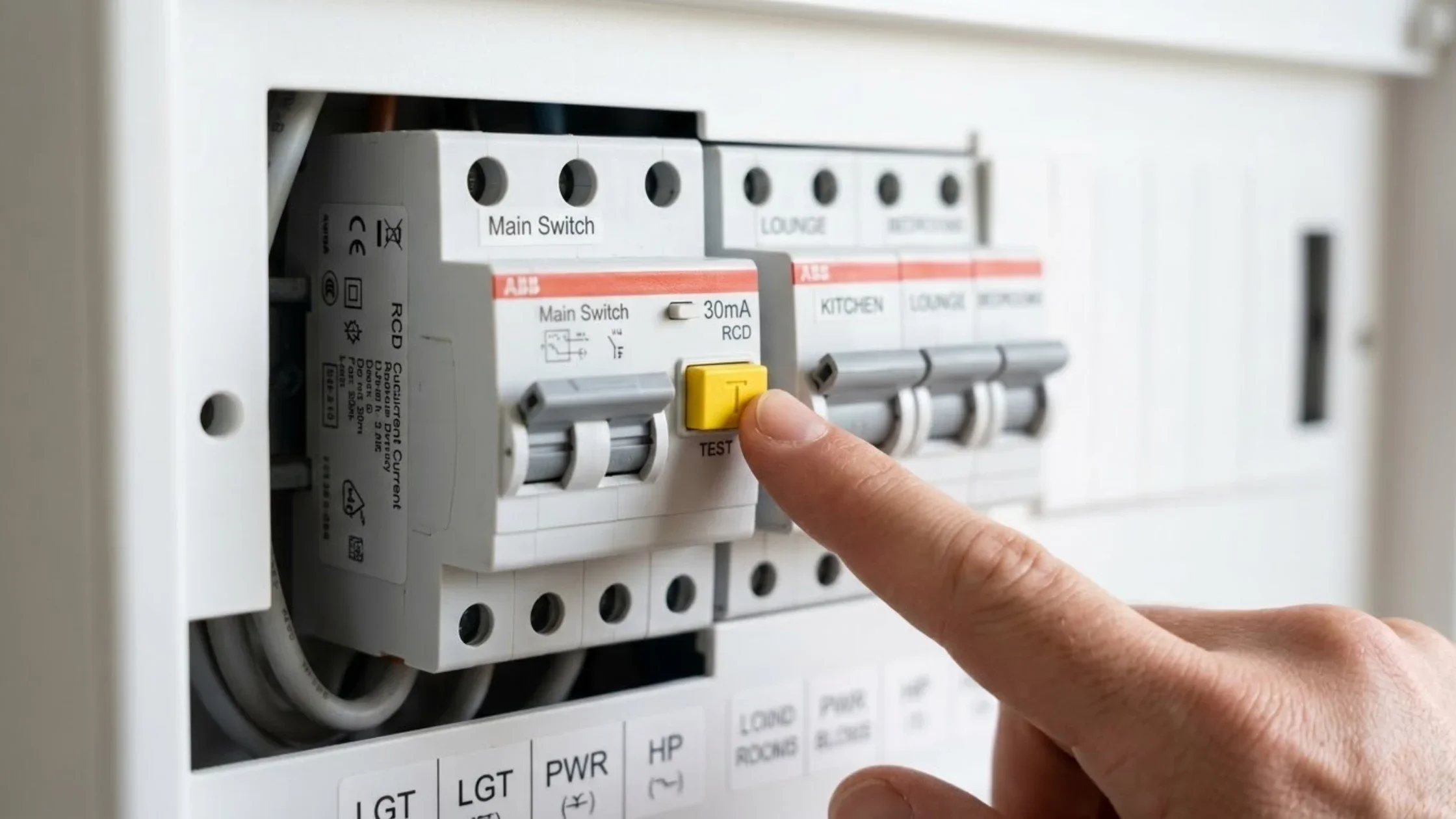
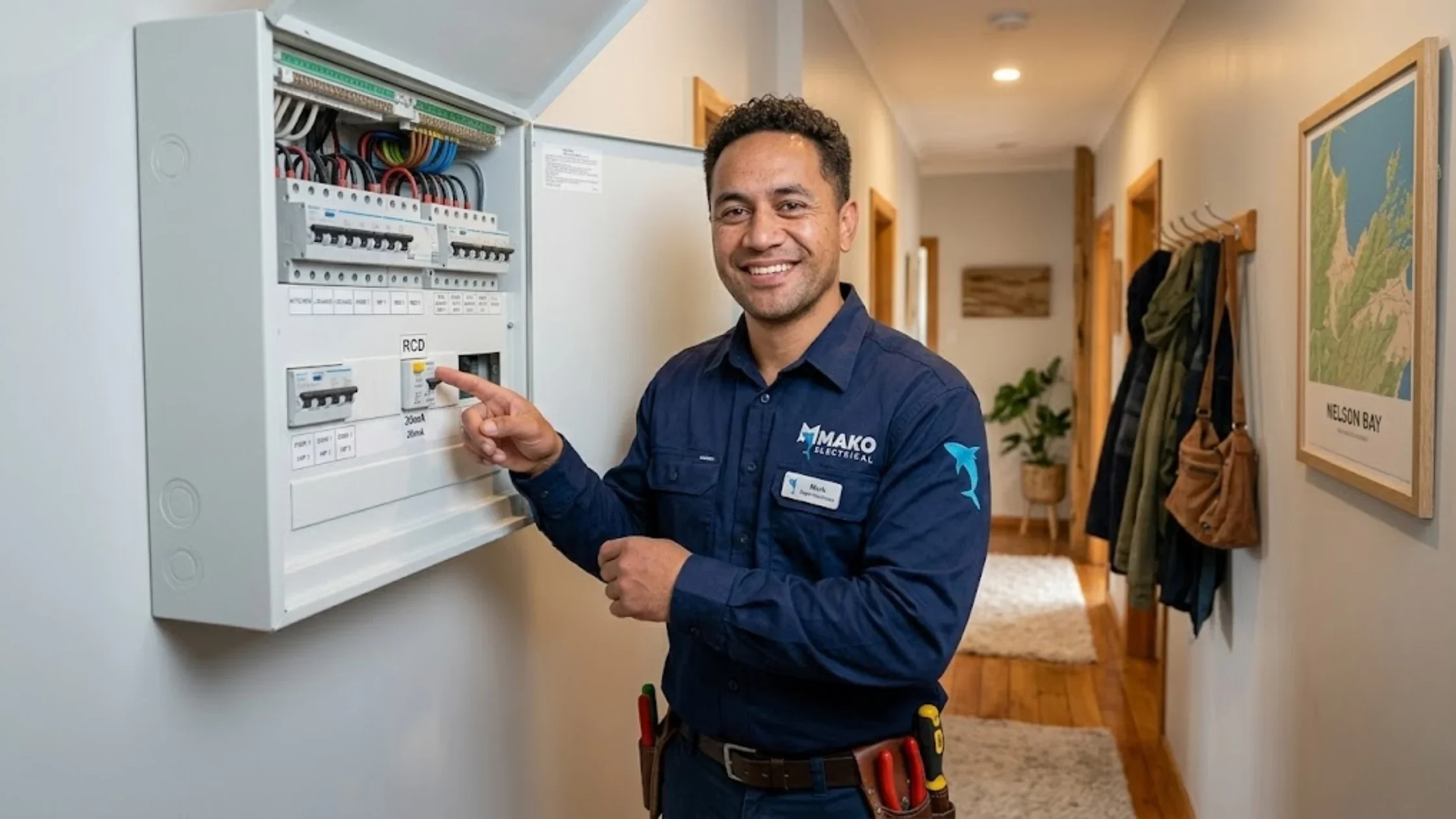
First, locate your fuse box or switchboard. It is behind a small door in the hallway, in the garage or outside near the front door. Open it up and look for the switches that have a small button marked with a "T" or the word "Test."
2. Warn the Family
Before you push anything, let everyone in the house know the power will go off for a moment. If someone is halfway through a high score on a video game or finishing a laundry cycle, they might appreciate a heads-up! What's more, make sure your computers are turned off to keep your data safe.
3. Push the Test Button
press the "Test" button. You should hear a loud click, and the switch should flip to the "Off" position. This tells you that the internal mechanism works perfectly and will trip if there is ever a real emergency.
4. Reset the Switch
To turn your lights and power back on flip the switch back up to the "On" or "Reset" position. That's it! You have completed your monthly safety check. If the switch did not move when you pushed the button, it means the device is faulty and needs replacement by a professional.
Why Nelson Homeowners Choose Mako Electrical
Electricity is wonderful, but it deserves respect. We've seen many homes in the Tasman region where RCDs have seized up because they haven't been tested in years. By performing this check , you are taking a proactive step in home maintenance.
If you find that your RCD won't reset, or if it trips without you pushing the button, there is likely an underlying fault. In these moments, you need a local team you can trust. We pride ourselves on being the go-to qualified electrician for Nelson families giving honest advice and reliable repairs. You can explore our full range of residential electrical services to see how we keep our community powered up and protected.
When to Call a Professional
While a DIY test is great for regular maintenance, some jobs are for the experts. In New Zealand electrical work is regulated for a reason—safety. You should reach out to the team at Mako Electrical if:
The test button feels "mushy" or does nothing when you press it.
The RCD trips during the day or night.
You notice a burning smell or discolouration around your switchboard.
You are moving into a new home and want a full safety audit.
Testing your system is the best way to make sure your home stays a safe place for your kids to play and your family to grow. It takes a minute, so why not head over to your switchboard right now and give it a try?
Frequently Asked Questions
-
You should test your RCD every month. It is a quick and easy way to make sure the safety switch is working. Many people set a reminder on their phone or do it when their power bill arrives. Regular testing prevents the internal parts from getting stuck and ensures that the power will cut off if there is an electrical fault, which keeps your family safe from shocks.
-
If you press the test button and the switch does not flip to "off," your RCD is faulty. This is a serious safety risk because the device will not protect you during a real electrical emergency. You should not try to fix it yourself. Instead, contact a qualified electrician right away to have the unit replaced. A broken RCD is like having a smoke alarm with no batteries—it won't help when you need it most.
-
Testing your RCD is just like a brief power cut. It will not damage your appliances, but it will turn them off. It is a good idea to turn off your computers or sensitive electronic gear before testing to avoid losing any unsaved work. Your fridge and freezer will be fine since the power is off for a few seconds. It is a very small price to pay for knowing your home's electrical system is safe.
-
If your RCD trips , it means there is a "nuisance fault." This could be caused by a faulty appliance like a leaky kettle or an old fridge or it could be moisture in an outdoor power socket. It shows that the RCD is doing its job by detecting a leak. To find the problem, try unplugging all appliances and plugging them back in one by one. If it keeps happening, a professional electrician can use special tools to find the leak.
-
No, they perform different jobs. A circuit breaker protects your house wiring and appliances from getting too hot or catching fire if there is too much power running through them. An RCD is designed to protect people. It monitors the flow of electricity and shuts everything down if it detects that power is leaking through a person or a faulty wire. Most modern Nelson homes have "RCBOs," which are smart switches that do both jobs at once.
-
Your RCD sits inside your main electrical switchboard. This is a box you'll find in your garage, laundry, or on an outside wall of your house. When you open the cover, look around for a switch with a small button next to it often marked with the letter "T." In older homes, you might also have "plug-in" RCDs used for power tools, but every modern home should have them built into the main board.
-
Under New Zealand safety standards most new electrical work and renovations require RCD protection for all power and lighting circuits. This ensures that every room in your house is safe. If you live in an older home in Nelson, you might have RCDs on a few circuits. It is a very smart idea to have an electrician upgrade your board so that every part of your home has this life-saving technology installed.
-
No, you must never try to replace an RCD yourself. In New Zealand, it is illegal and very dangerous for anyone other than a licensed electrician to work inside a switchboard. There is a high risk of fatal electric shock or causing a house fire if it is wired . Always call a qualified professional like Mako Electrical to handle any repairs or replacements so your home meets all the required safety regulations.
-
An electrical leak, or "residual current," happens when electricity escapes its intended path. Instead of flowing through the wires to your toaster and back, it might flow through a frayed cord, damp walls, or even a person's body to reach the ground. An RCD is like a very sensitive pair of scales; it weighs the power going in and out. If they don't match , it knows there is a leak and cuts the power right away.
-
The test button checks the mechanical part of the RCD to ensure the switch can flip . While it is a great monthly check for homeowners, it doesn't test the actual "trip time" or sensitivity. Every few years, it is a good idea to have an electrician perform a "push-button and trip-time test" with professional meters. This ensures the device is still fast enough to save a life according to the latest NZ safety standards.
