
Induction vs. Ceramic Hobs: Electrical Capacity Requirements
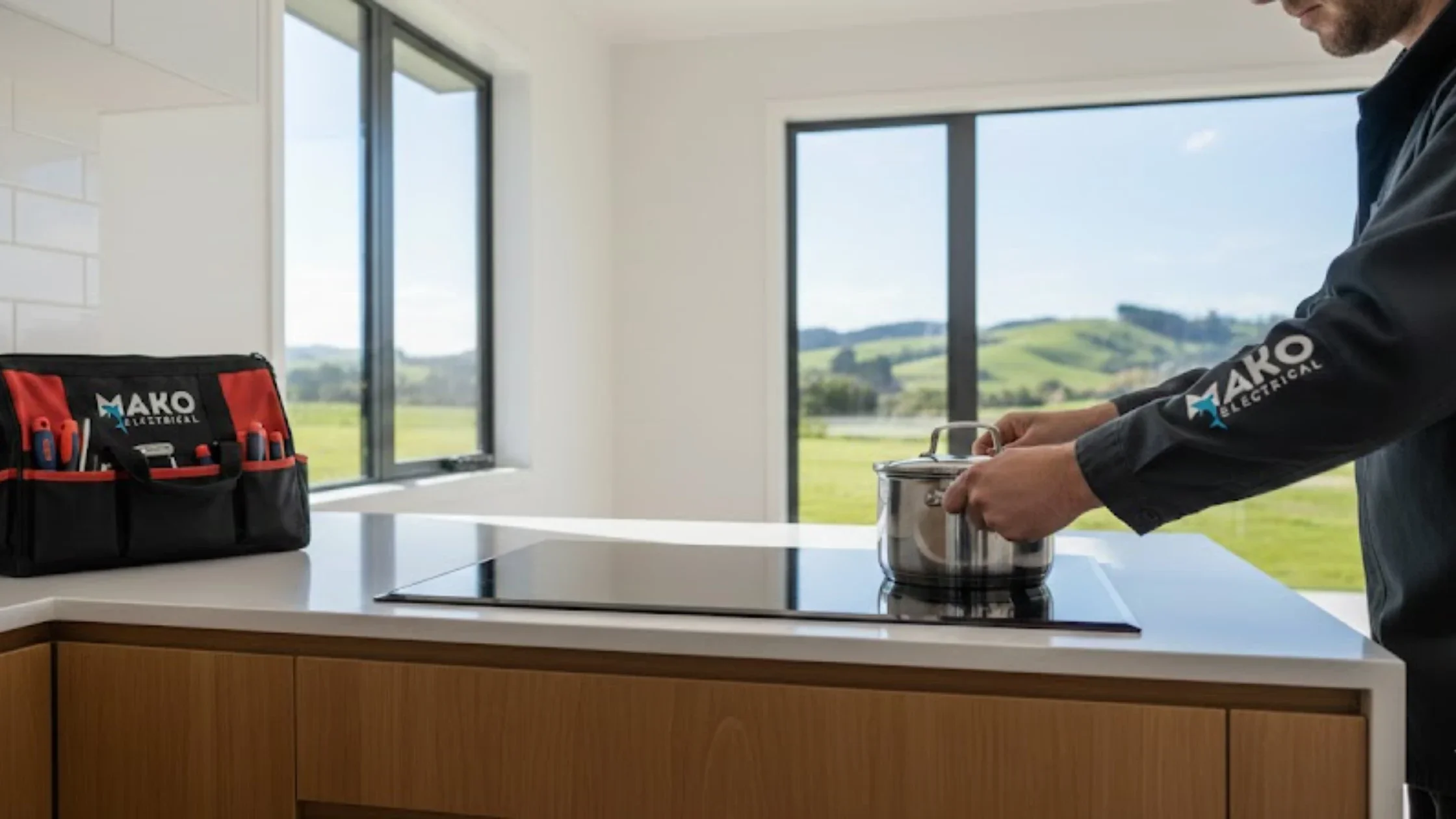
The Secret Behind Your New Kitchen
Imagine this: You’ve finally picked out that sleek, high-tech induction hob. It’s the centerpiece of your Nelson kitchen renovation. But the moment you turn on all four zones to boil pasta and sear a steak, click. The lights go out. The house is silent. Your modern dream kitchen just crashed your old electrical system.
At Mako Electrical, we see this happen more often than you’d think. Homeowners in Nelson and Tasman are often told about the cooking speed of induction vs. ceramic, but rarely about the "invisible" requirement: your switchboard’s capacity. Before you swipe your card for that expensive new appliance, let’s make sure your home can actually handle the heat.
Key Takeaways
Induction hobs cook faster but often need more "instant" power than older ceramic models.
Older Nelson homes may require a switchboard upgrade to meet modern safety standards.
Dedicated circuits are usually a must for high-kilowatt kitchen appliances.
Professional assessment by a local sparky saves you from "appliance regret" later.
Check our residential services for a pre-purchase inspection.
Understanding the Power Play: Ceramic vs. Induction
When you look at a ceramic hob and an induction hob side-by-side, they look almost identical. Both have a smooth, black glass surface. However, the way they use electricity is worlds apart.
A ceramic hob works like a traditional heater. It uses coiled elements under the glass that get red hot and transfer that heat to your pot. It’s steady and predictable.
An induction hob, on the other hand, uses powerful electromagnets. It doesn’t get hot itself; instead, it turns your cookware into the heat source. This is incredibly efficient and fast, but it requires a significant "burst" of electricity to start those magnetic fields. This brings us to the most important question: Is your switchboard ready for that surge?
Why Your Switchboard is the Boss of Your Kitchen
Think of your switchboard as the brain of your home. Every light, heater, and phone charger gets its energy from here. Many older homes in the Tasman region were built when the biggest electrical load was a toaster and a few lightbulbs.
Modern induction hobs can pull between 3kW and 7kW (or more!) at full tilt. If your switchboard is still using old-fashioned porcelain fuses or doesn't have enough "room" in the load limit, adding a high-powered hob is like trying to pour a bucket of water through a tiny straw. It just won’t fit, and the safety switch will trip to prevent a fire.
The Hidden Costs of Installation
When you're budgeting for a renovation, the price tag on the hob isn't the final number. You need to consider the induction hob installation requirements.
Wiring Gauge: Older kitchen wires might be too thin for the high current of a new hob.
RCD Protection: Modern NZ safety standards require specific "Residual Current Devices" to protect you from shocks.
Mains Capacity: Sometimes, the wire coming from the street to your house needs to be checked if you are adding multiple high-power appliances (like a hob, a double oven, and an EV charger).
For a deep dive into the technical differences, Consumer NZ offers a great comparison, but remember they don't see the wiring behind your walls—we do!
How to Check if You’re Ready
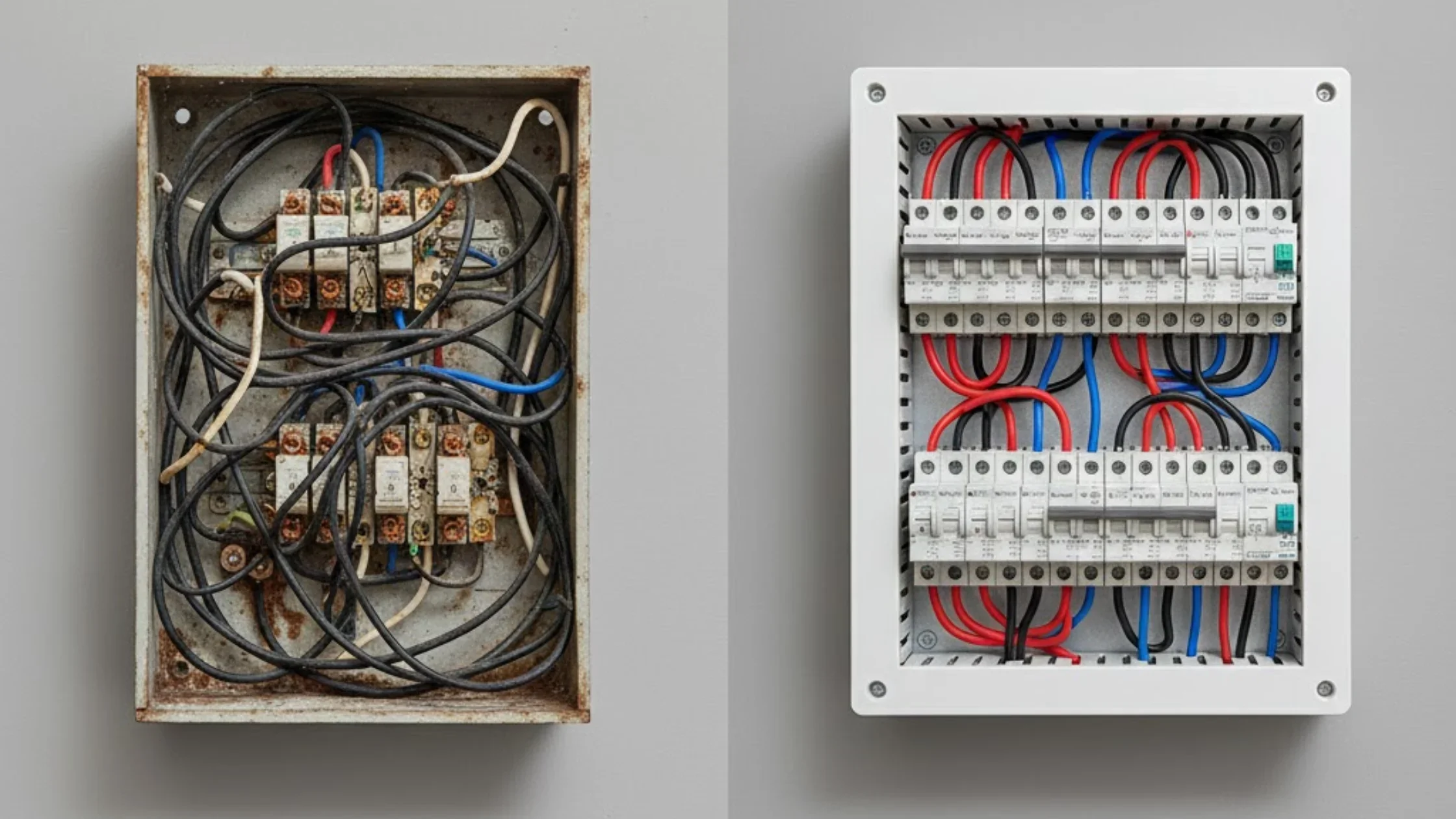
Before you fall in love with a specific model, take a photo of your switchboard and send it to your local electrician. We look for things like the "Amperage" of your main switch. If your home is limited to 40 or 60 Amps total, and a new hob takes up 32 Amps on its own, you won't be able to run your heat pump and your oven at the same time.
It’s much cheaper to find this out now than after the granite benchtop has been cut to fit an appliance you can't use. You can see our full range of electrical services here to help you plan your project safely.
Safety and Efficiency for Nelson Families
We love helping Nelson families create their dream kitchens. Choosing the right energy-saving technology, like those recommended by EECA, is great for the planet and your power bill. But true efficiency starts with a safe foundation.
Upgrading your switchboard isn't just about the kitchen; it’s about protecting your whole family. Modern boards are much better at detecting faults before they become dangerous. If you're planning a renovation, let’s make sure your "dream kitchen" doesn't become an "electrical nightmare."
Ready to Upgrade Your Kitchen?
Don't guess when it comes to electricity. Contact the team at Mako Electrical today for a quick switchboard health check. We’ll make sure your new induction hob has the power it needs to cook those family meals perfectly.
Frequently Asked Questions
-
Yes, most induction hobs require a dedicated 32-amp circuit and a specific wire size (usually 6mm) to handle the high electrical load safely. Unlike smaller appliances, you cannot simply plug them into a standard 10-amp wall socket. A registered electrician must install a permanent connection from your switchboard to the hob to ensure it meets New Zealand safety standards and doesn't overheat your home's internal wiring.
-
It depends on your existing wiring. While both use electricity, induction hobs often have higher peak power demands. If your old ceramic hob was on a lower-rated circuit (like 20 amps), your electrician will need to upgrade the cable and the circuit breaker in your switchboard to a 32-amp version. You must also check if your switchboard has an RCD (safety switch) installed, as this is now a legal requirement for new appliance installations in NZ.
-
Ceramic hobs use radiant heat and pull power steadily, while induction hobs use magnetic fields to heat the pan directly. Induction is much faster and more energy-efficient overall, but it requires a larger "surge" of current when using multiple zones or "boost" modes. This means your home's main electrical supply must be able to handle that sudden high demand without tripping the main switch or dimming the lights in the rest of your house.
-
Most standard four-zone induction hobs have a total rated power of between 6.0kW and 7.4kW. When you use the "Power Boost" function on one or more zones, the hob pulls maximum electricity. If your Nelson home has an older 40-amp main supply, running a 7kW hob alongside a water heater or heat pump could exceed your house's total capacity, making a switchboard assessment vital before you purchase the appliance.
-
If your power trips when you turn on the hob, it usually means the circuit is overloaded or there is a "leak" to the earth. This happens if the hob is connected to a circuit that is shared with other appliances, or if your switchboard's breaker is too small for the hob's requirements. Clicking sounds can be normal magnetic vibration, but tripping the power is a serious safety sign that your electrical system cannot handle the induction hob's capacity.
-
If your home is more than 20 years old, a switchboard upgrade is highly recommended during a kitchen renovation. New induction hobs and double ovens pull significantly more power than older appliances. Upgrading to a modern board with RCDs and higher capacity ensures your new kitchen is safe, meets current insurance requirements, and can handle the combined load of your hob, oven, dishwasher, and fridge without any risk of electrical fire.
-
Some "low-current" or "plug-and-play" induction hobs are designed to work on a standard 10-amp or 15-amp circuit, but these are usually limited to one or two zones and have much less power. For a full-sized family hob with four or five zones, you will almost certainly need a hard-wired 32-amp connection. Always check the manufacturer's "Total Connected Load" specifications before buying to see if it requires a dedicated high-power line.
-
In New Zealand, all high-power hobs must be installed by a registered electrician who will provide a Code Compliance Certificate (COV) or Record of Work. Requirements include a dedicated circuit, a correctly rated circuit breaker, and an isolation switch located within reach of the hob but not directly above it (for safety during a fire). The wiring must also be protected by a modern RCD to prevent electric shocks.
-
The labor cost for installation is similar, but the "hidden" costs can be higher for induction if your home needs a wiring upgrade. Because induction hobs often have higher kW ratings, they are more likely to trigger the need for a thicker cable or a switchboard upgrade. However, the long-term energy savings and faster cooking times usually outweigh these initial electrical setup costs for most Nelson and Tasman homeowners.
-
Look at your main switch (usually the largest one on the board); it will have a number like 40A, 60A, or 80A. If you have a 40A main supply and want to add a 32A induction hob, you only have 8A left for the rest of your house! A professional electrician from Mako Electrical can perform a "Maximum Demand" calculation to tell you exactly how much spare capacity you have and if an upgrade is needed.
