
Safe Outdoor Wiring NZ: What Every Homeowner Needs to Know Before Powering Up Outside

Safe outdoor wiring in NZ means using weatherproof rated components installed by a licensed electrician in compliance with AS/NZS 3000 wiring standards. Get it wrong and you risk electric shock fire, voided insurance or a failed inspection.
Outdoor living is a Kiwi birthright. Whether you're hosting a summer BBQ on the deck running lights through your garden heating a spa pool or powering an outdoor kitchen, electricity is at the centre of it all. But the moment wiring leaves the shelter of your interior walls, the risks change . Sun, rain, salt air, insects and moisture all become factors. In regions like Nelson, Tasman and Marlborough coastal conditions make these risks even sharper. Understanding what compliant and safe outdoor wiring in NZ involves can be the difference between a setup that lasts decades and one that causes a serious incident.
Key Takeaways
Safe outdoor wiring in NZ requires compliance with AS/NZS 3000 and the Electrical (Safety) Regulations 2010, not just common sense.
IP ratings, RCD protection, and correct cable setup methods are non-negotiable for any permanent outdoor electrical setup.
Pool and spa areas carry the most stringent requirements, including equipotential bonding and low-voltage lighting zones.
Signs of non-compliant wiring include sparking outlets missing RCDs, unprotected surface cables, and extension cords used .
Licensed electricians must certify all outdoor electrical work with a Certificate of Compliance. Without this, both insurance and resale can be affected. Regional conditions like coastal salt air in Nelson and Tasman need extra attention to materials and corrosion resistance.
Why Outdoor Wiring Carries Unique Risks Compared to Indoor Installations
Indoor wiring exists in a controlled environment. It stays protected from UV radiation, rainfall, humidity, and temperature swings. Outdoor wiring deals with all of those conditions at once, often year-round.
This explains why the AS/NZS 3000 standard, New Zealand's primary wiring rules document, sets specific requirements for outdoor electrical installations that go well beyond what's needed inside the home. Installers must account for:
Water getting into outlets, switches, and junction boxes
UV breaking down cable sheathing over time
Rust in coastal or high-humidity environments
Physical damage from garden tools, lawn mowers, or accidental digging
Heat buildup when cables run through conduit in direct sunlight
Each of these failure modes can cause a short circuit, equipment damage, or in worst-case scenarios, a fire or electrocution. The risks are real. Insurance New Zealand data shows electrical faults as a leading cause of house fires year after year, and outdoor installations are a common culprit when DIY work or non-compliant components are involved.
If your property insurer discovers that outdoor electrical work was done without a Certificate of Compliance (CoC), they may decline your claim . That's a financial risk most homeowners don't consider until it's too late.
NZ Regulations That Apply to Safe Outdoor Wiring
New Zealand's Electrical (Safety) Regulations 2010 set the legal framework, while AS/NZS 3000 defines the technical standards. Any outdoor electrical installation must comply with both. Here's how those rules apply across the most common outdoor scenarios.
Decks, Patios, and Outdoor Entertaining Areas
Outdoor power points and light fittings on decks must carry a minimum IP44 rating meaning they resist water splashing from any direction. In areas exposed to direct rainfall or near hose use, IP55 or IP66 is more suitable.
Every outdoor circuit must be protected by a Residual Current Device (RCD). RCDs detect current leakage as small as 30 milliamps and cut the power within milliseconds, which is fast enough to prevent electrocution. Standard circuit breakers do not provide this protection. They're designed to protect cables, not people.
Cables running across decks or along exterior walls must be either enclosed in conduit or installed using armoured cable. Loose surface-run cables are not acceptable under AS/NZS 3000 for permanent outdoor installations.
Pool and Spa Areas
Pool and spa wiring is among the most regulated areas in residential electrical work and for good reason. Water and electricity create immediate life-threatening risk.
Key requirements for pool and spa installations include:
Low-voltage lighting (12V) within a defined zone around the water
No standard 230V outlets within 1.25 metres of the pool edge
Isolation switches that have an impact on pool pumps mounted but away from the water zone
Equipotential bonding: all metallic components (ladders, fencing, handrails) must connect to equalise voltage potential and eliminate shock risk
All pump and filter equipment in weather-rated enclosures
These aren't optional upgrades. They're mandated requirements. If your pool was installed more than ten years ago and hasn't had an inspection since, it's worth having a licensed electrician verify compliance before you sell your home.
Garden, Landscape, and Shed Wiring
Underground cables for garden lighting or detached sheds must be buried at minimum depths specified in AS/NZS 3000 typically 500mm under garden areas and deeper under driveways. They must be marked with orange warning tape above the cable run so future digging doesn't cause damage or injury.
For outdoor kitchens or large garden sheds with multiple appliances, a dedicated outdoor-rated sub-circuit or sub-board is often the right solution rather than extending a single circuit from the house. Extension leads are not a permanent installation method regardless of how long they've been in use.

Common Signs That Your Outdoor Wiring Isn't Up to Standard
Many existing outdoor setups in older homes, were installed before current standards were tightened. Watch for these red flags:
Outlets or switches that spark when plugged in or switched
Flickering or intermittent outdoor lights
No visible RCD protection on outdoor circuits
Cables stapled to exterior timber without conduit
Cracked, discoloured, or heat-warped fittings
Power cutting out during or after rainfall
Extension cords used as a permanent outdoor power solution
If any of these apply to your property, it's time to book an inspection. The team behindoutdoor garden electrical nelson tasman works with homeowners across the region who've inherited non-compliant setups and need them brought up to current standards.
What a Compliant Outdoor Electrical Setup Includes
Here's a quick comparison of compliant versus non-compliant outdoor electrical features:
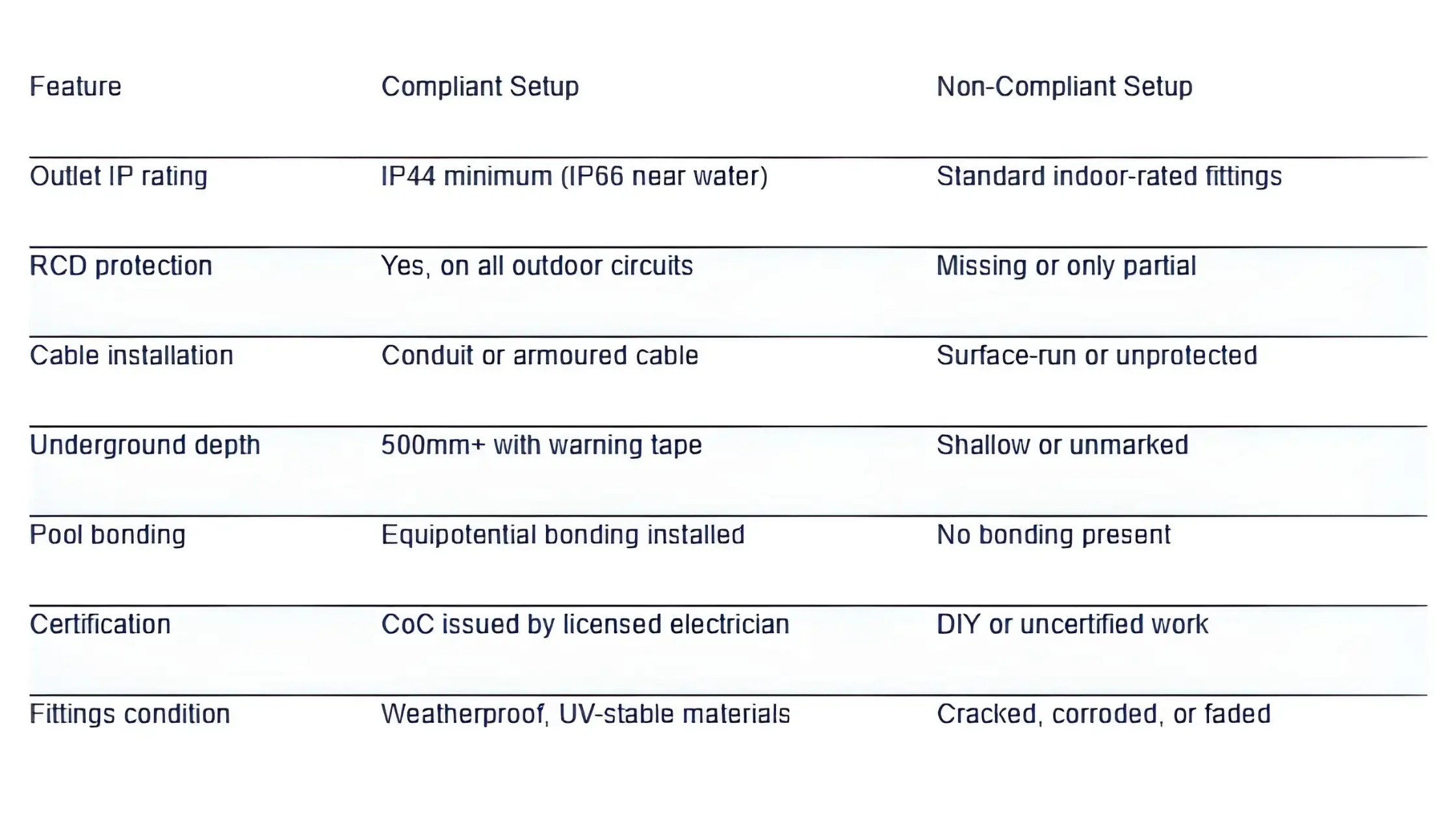
A compliant system doesn't just protect you . It protects your family day-to-day and holds its value if you ever sell your home. Buyers' solicitors request electrical inspection reports and a non-compliant outdoor setup can delay or derail a sale.

Choosing the Right Electrician for Outdoor Work in NZ
Not all electrical work requires the same level of specialist knowledge. Outdoor installations demand an electrician who understands both the technical standards and the specific environmental conditions of your location.
For homeowners in the Nelson, Tasman, and Marlborough regions,Mako Electrical provides the local expertise that makes a real difference. Coastal conditions in areas like Nelson and Mapua mean salt-laden air accelerates corrosion on standard fittings. The right electrician will spec materials , not just install the cheapest IP-rated option available.
When choosing an electrician for any outdoor project, ask:
Are they registered with the Electrical Workers Registration Board (EWRB)?
Will they provide a Certificate of Compliance on completion?
Do they have experience with the specific type of installation you need (pool, garden, deck shed)?
Can they advise on future-proofing such as conduit capacity to add additional circuits later?
You can learn more about how Mako Electrical operates by visiting theirabout page, which outlines their approach and experience. Their full range of offerings is listed under theirservices page covering everything from switchboard upgrades to landscape lighting.
For anyone looking at home electrical work, theirresidential electrical services nelson page covers the full scope of what's available in the region.

Things to Know
The minimum IP rating for most outdoor outlets in NZ is IP44, but areas with direct water exposure or near pools need IP66.
DIY outdoor electrical work is illegal in New Zealand for most tasks. A licensed electrician must complete and certify the work.
RCDs are mandatory on all outdoor circuits, not just ones near water. Standard circuit breakers do not offer the same protection.
Equipotential bonding around pools is required by law and is missing in older setups. It connects metallic elements to prevent dangerous voltage differences.
Underground cables must be buried at specific depths and marked with warning tape. Shallow or unmarked runs are a common non-compliance issue.
Outdoor wiring that fails to meet AS/NZS 3000 can void your home insurance if you file a claim.
Ready to Get Your Outdoor Wiring Assessed?
If you're planning a new outdoor project or you're not confident your existing setup meets current NZ standards, the smartest first step is a professional inspection. Book a site visit with Mako Electrical, and they'll assess your current setup, identify any compliance gaps, and provide a clear quote for any work needed. Get in touch today to arrange your outdoor electrical inspection and get peace of mind before your next outdoor project begins.
Frequently Asked Questions
-
Yes. In New Zealand, all permanent outdoor electrical work must be completed by a registered electrician who is licensed with the Electrical Workers Registration Board.
They are also legally required to issue a Certificate of Compliance upon completion. Without this document, the work has no legal standing and your insurer may decline claims arising from that installation.
-
IP44 is the minimum for most outdoor locations, but IP55 or IP66 is required in areas exposed to direct water spray, heavy rainfall, or proximity to pools.
The higher the IP number, the more protection the fitting offers against water ingress. In coastal or high-humidity areas, choosing a higher rating than the minimum is always the better call.
-
No. Extension cords are designed for temporary use only and are not a code-compliant permanent installation under NZ standards.
Running a standard extension cord permanently to a deck, shed, or outdoor kitchen creates both safety and compliance risks. A licensed electrician can install a dedicated weatherproof outdoor circuit that meets AS/NZS 3000 requirements.
-
Underground cables must typically be buried at least 500mm deep in garden areas, with orange marker tape installed above the cable to warn anyone digging in the future.
Depths vary depending on the location, for example, cables under driveways or paths require greater depth and additional protection. Your electrician will confirm the correct specification for your site.
-
A general inspection every five to ten years is a reasonable baseline, but you should arrange an inspection sooner if you notice flickering lights, tripping breakers, corroded fittings, or power loss during rain.
Properties in coastal areas like Nelson and Tasman may benefit from more frequent checks due to the accelerated corrosion caused by salt air. Before purchasing an older property, an electrical inspection is well worth the cost.
The Bottom Line on Safe Outdoor Wiring NZ
Getting your outdoor electrical setup right isn't just about ticking boxes. It's about making sure the spaces where you spend your best time, your deck, your garden, your pool area, are genuinely safe for your family and visitors. Safe outdoor wiring in NZ is governed by clear, enforceable standards, and the consequences of ignoring them range from insurance problems to genuine physical danger.
If you're in the Nelson, Tasman, or Marlborough region and you need outdoor electrical work done properly, Mako Electrical has the local knowledge and the technical expertise to get the job done right. Get in touch to book your assessment and take the guesswork out of outdoor power.
