
5 Faulty Wiring Warning Signs Nelson Homeowners Should Never Ignore

Faulty wiring warning signs Nelson homeowners need to recognise include flickering lights, burning smells, frequently tripping breakers, buzzing sounds, and sparking or dead outlets. Catching these early could be the difference between a quick repair and a house fire.
Wiring problems are sneaky. They hide inside walls, beneath floorboards, and behind power points, quietly building toward something serious before most people even notice anything is wrong. In the Nelson and Tasman region, where many homes were built decades ago and some have had piecemeal renovations over the years, the risk is higher than most residents realise. This article walks you through the five warning signs that something is wrong with your home's wiring, why each one matters, and what to do about it.
Key Takeaways
The five main faulty wiring warning signs Nelson homeowners need to watch for are: flickering lights, burning smells, frequent breaker trips, buzzing sounds, and sparking or dead outlets.
Each of these signs can indicate a risk of electrical fire or electric shock and none should be dismissed as a minor inconvenience.
Older Nelson homes are at higher risk due to ageing wiring materials, but newer homes are not immune, especially those with a history of DIY renovations.
Licensed electricians can use tools like thermal imaging to find hidden faults before they become emergencies.
Electrical inspections are recommended every five to ten years, and immediately before or after purchasing a home.
Never attempt to investigate or repair wiring faults yourself. It is dangerous, and it is against the law in New Zealand.
Why Wiring Problems Are Especially Common in Nelson Homes
Nelson has a mix of older character homes and newer builds, and that mix creates a range of electrical risks. Homes built before the 1980s may still contain rubber or cloth-insulated wiring, materials that have a limited lifespan and degrade over time. Insulation cracks, connections loosen, and protective materials break down, especially in areas with temperature fluctuations or moisture exposure.
Even newer homes are not automatically safe. Unlicensed electrical work done during a renovation, a DIY switchboard modification, or an extension added without proper inspection can all introduce hidden hazards. The problem with wiring faults is that they do not always announce themselves loudly. More often, they show up as small, easy-to-dismiss signs that homeowners brush off as quirks of an older house.
Understanding what those signs actually mean is the first step toward protecting your home and your family.

1. Flickering or Dimming Lights Are Not Just Annoying
If your lights flicker when you turn on the washing machine or dim whenever the kettle boils, that is not normal. It is a sign your electrical system is struggling.
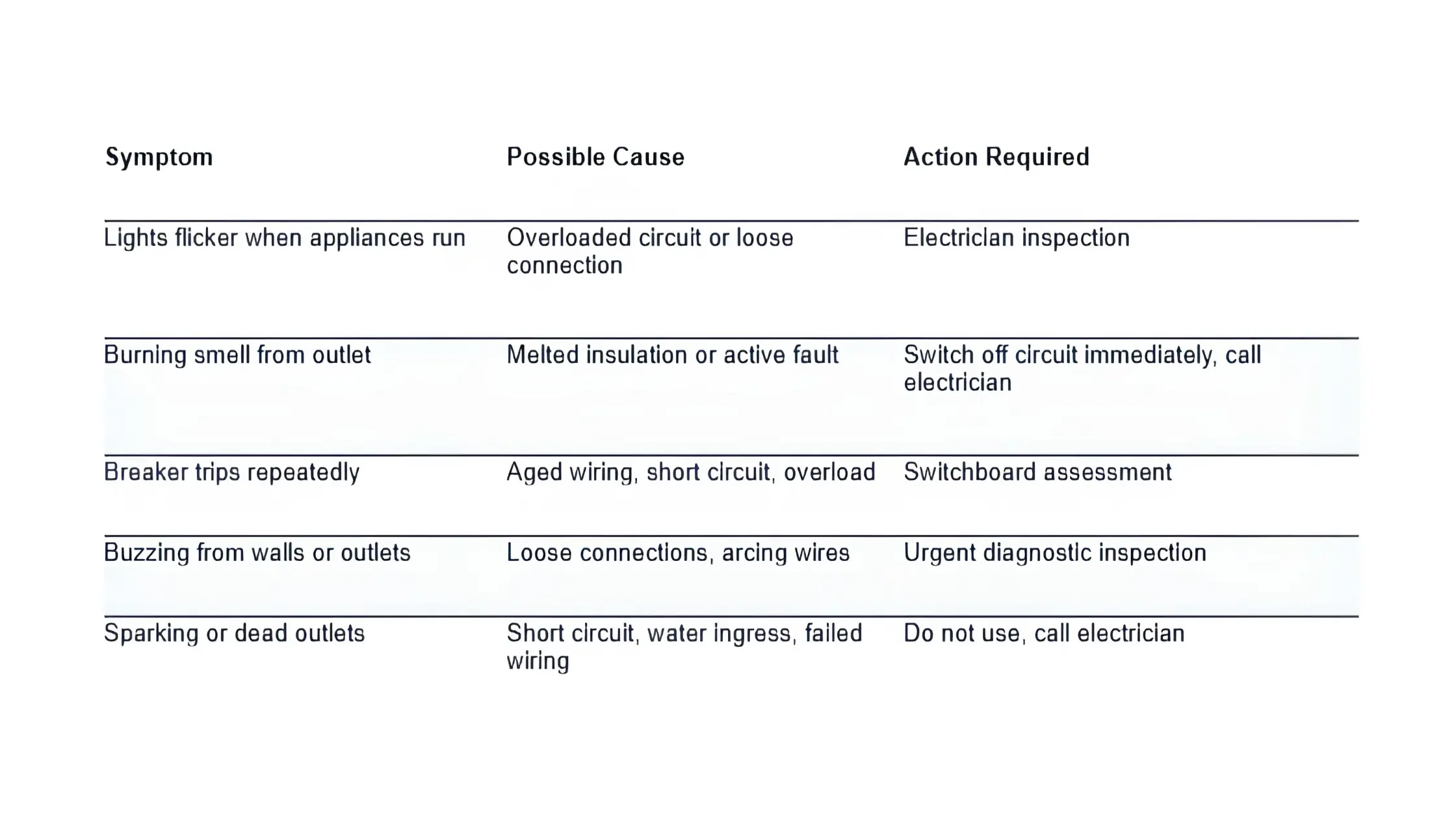
Flickering and dimming typically point to one of three issues: loose wiring connections, an overloaded circuit, or deteriorated wire insulation. Any of these can cause wiring to overheat. When wiring overheats inside a wall cavity, it can ignite surrounding materials, and by the time you smell smoke, the fire may already be taking hold.
Single, occasional flickers are less concerning. What you should pay attention to is a pattern: lights that dim regularly when high-draw appliances kick in, or fixtures that flicker without any obvious trigger. Both patterns suggest the circuit cannot safely handle the load being placed on it.
The fix may be as simple as tightening a loose connection, or it may require circuit upgrades. Either way, it needs to be assessed by a licensed electrician rather than ignored.
2. Burning Smells and Discoloured Outlets Require Immediate Action
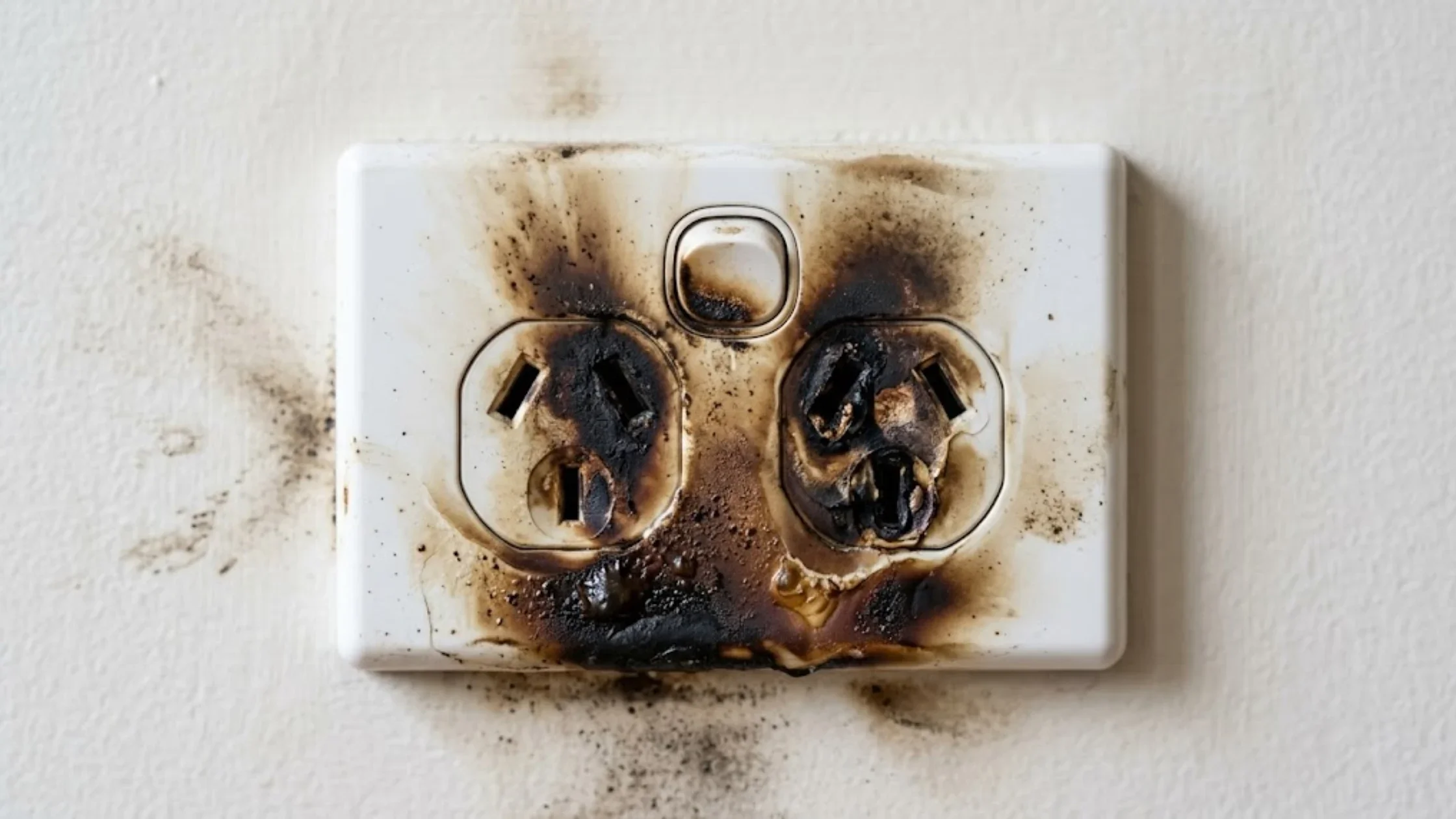
A burning smell coming from an outlet or light switch is one of the most urgent faulty wiring warning signs Nelson residents can encounter. It almost always means wire insulation has melted or is currently melting, which is a direct fire risk.
Look out for these accompanying signs:
Brown or black scorch marks around power points or switches
Outlets or switch plates that feel warm or hot to the touch
A plastic or metallic burning odour that appears when you use a specific outlet
Do not assume the smell will go away on its own or that it is just a dusty element burning off. If you notice any of these signs, switch off the relevant circuit at the switchboard, and stop using that outlet entirely until a licensed electrician has inspected it.
This is not a situation where you wait for a convenient appointment time. Mako Electrical responds to urgent electrical issues across Nelson and the wider region. You can get in touch directly to arrange a prompt inspection if you are dealing with signs like these right now.
3. Circuit Breakers That Keep Tripping Are Trying to Tell You Something
Your switchboard's circuit breakers exist for one reason: to cut power when a circuit is overloaded or a fault is detected. Occasional tripping is normal. Frequent tripping, especially without obvious cause, is not.
If your breakers are tripping regularly, consider what could be causing it:
Ageing wiring that cannot handle the load of modern appliances
Short circuits caused by damaged or deteriorating wire insulation
Faulty appliances drawing more current than the circuit was designed for
An undersized switchboard that has not been upgraded to meet current demand
Resetting the breaker does not resolve the underlying problem. It just restores power temporarily while the root cause continues to develop. Over time, this can lead to wiring that is regularly pushed past its safe operating limit.
If your switchboard is tripping more than once or twice a month without a clear reason, it is time to have it professionally inspected. Mako Electrical provides a full range of residential electrical services nelson that include switchboard assessments, circuit load testing, and upgrades where needed.
4. Buzzing or Crackling Sounds from Outlets and Walls
Electricity should move through your home silently. If you hear buzzing, crackling, or sizzling sounds coming from an outlet, a light switch, or from inside a wall, something is wrong.
These sounds are typically caused by electrical arcing, where current is jumping across a gap created by a loose connection, deteriorated insulation, or a damaged wire. Arcing is one of the leading causes of electrical fires in New Zealand homes because it generates extreme heat in a very small area, often inside a wall cavity where it cannot be seen.
Common sources of these sounds include:
Loose wire terminals at outlets or switches
Wiring that has been damaged by pests (rats chewing through insulation is more common than many people realise)
Water ingress causing partial short circuits
Poor grounding in older wiring systems
If you hear any of these sounds, stop using the affected outlet or switch. Do not try to open the outlet yourself to investigate. Mako Electrical's team has the diagnostic tools and training to locate faults safely, including thermal imaging that can detect heat build-up in wiring that is not yet visible to the naked eye.

5. Sparking or Dead Outlets Signal a Failing Circuit
An outlet that sparks when you plug something in, or one that simply stops working, is a clear sign of a wiring problem that needs attention.
Small, brief sparks can occasionally occur during normal use as a socket connects with a plug. However, large sparks, sparks accompanied by a popping sound, or sparks that happen every time you use a particular outlet all indicate a fault. This could be a short circuit within the outlet itself, damaged wiring behind the wall, or moisture that has found its way into the socket.
Dead outlets, where nothing gets power regardless of what you plug in, may seem less urgent, but they often indicate a failed wire connection or a circuit issue that could be affecting other parts of your home's system as well.
Neither of these issues should be left unaddressed. A sparking outlet is a fire and shock hazard. A dead outlet may signal a larger underlying fault.
To get a clearer picture of the services Mako Electrical offers for diagnosing and repairing outlet and circuit faults, visit their services page. You can also learn more about the team's qualifications and approach to residential electrical work in the Nelson region.

Things to Know
Rubber and cloth-insulated wiring found in pre-1980s New Zealand homes has a design lifespan of roughly 25 to 40 years, meaning many older Nelson homes are well past that threshold.
RCD (Residual Current Device) protection is now required under New Zealand electrical standards. If your home does not have RCDs installed, you are missing a critical layer of safety.
DIY electrical work is illegal in New Zealand without a registered electrician's licence. Unlicensed work also voids most home insurance policies.
Electrical faults are responsible for a significant proportion of residential fires in New Zealand each year, many of which begin inside wall cavities where nobody sees them starting.
Insurance companies can decline claims if they determine a fire or damage was caused by wiring that showed prior warning signs which were not addressed.
Even a recently renovated home can have dangerous wiring if the renovation involved unlicensed electrical work or if only cosmetic changes were made without inspecting the underlying systems.
Ready to Get Your Home's Wiring Checked?
If any of the warning signs above sound familiar, the most important thing you can do right now is book a professional electrical inspection. Do not wait until a fault becomes an emergency. Contact Mako Electrical today to arrange a safety inspection for your Nelson home and get expert advice on what your wiring actually needs.
Frequently Asked Questions
-
If your home is more than 30 years old and has never had a full electrical inspection, it is very likely overdue for one.
Homes built before the 1980s often contain wiring materials that have exceeded their safe lifespan. Signs like frequent breaker trips, flickering lights, or discoloured outlets in an older property strongly suggest a rewire or at minimum a thorough assessment is needed. A licensed electrician can test the condition of your existing wiring and give you a clear picture of what work is required.
-
No, a sparking outlet should be taken out of service immediately and inspected by a licensed electrician before being used again.
Even if the sparking seems minor, it can indicate a short circuit, damaged wiring, or moisture ingress, any of which can escalate quickly. Continuing to use it risks electric shock or starting a fire inside your wall cavity.
-
You can reset a breaker once, but if it trips again shortly after, you should stop resetting it and call an electrician.
Repeatedly resetting a breaker that keeps tripping forces your wiring to carry load it cannot safely handle. A single trip after running several high-demand appliances simultaneously is not unusual, but a pattern of tripping signals an underlying fault that needs professional diagnosis.
-
Electrical safety inspections are recommended every five to ten years, or immediately if you notice any warning signs.
You should also arrange an inspection before purchasing a property, before undertaking significant renovations, and after any event that may have caused damage such as flooding or a rodent infestation. Regular inspections are the most reliable way to catch developing faults before they become serious.
-
Yes, insurers can decline claims if they determine that wiring faults were present and not addressed prior to an incident.
New Zealand home insurance policies generally require that properties are maintained in a safe condition. If an investigation after a fire reveals pre-existing wiring faults that showed warning signs, your insurer may find grounds to reduce or reject your claim. Keeping a record of electrical inspections and any remedial work carried out provides important documentation.
The Bottom Line on Faulty Wiring Warning Signs Nelson Homeowners Face
The warning signs outlined in this article are not things to put on a list and deal with later. Faulty wiring does not resolve itself, and the longer a fault is left unaddressed, the more serious the risk becomes. Whether your home is a 1960s brick and tile or a recently updated weatherboard, the only way to know your wiring is truly safe is to have it assessed by a licensed professional.
If you have spotted any of the signs described here, or if your home has never had a formal electrical inspection, reach out to Mako Electrical. Their team serves Nelson and the surrounding region with thorough, code-compliant electrical work and a focus on keeping homes genuinely safe rather than just patched up.
