
Why Do NZ Electrical Wiring Colours Matter During Renovations?
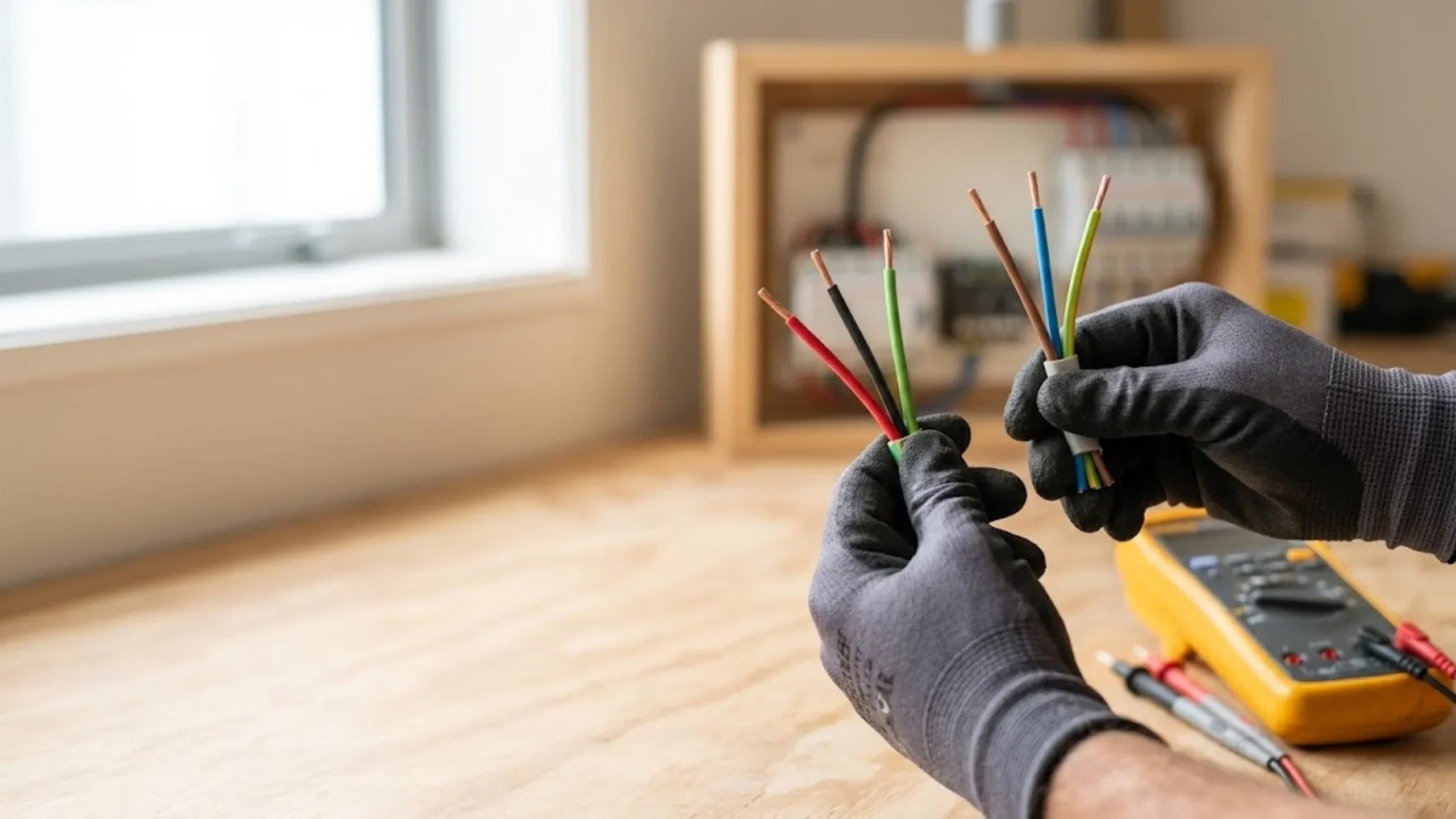
Wires Behind the Wall: The Problem Most Kiwis Miss
You knock out an old wall in your Nelson home, ready for that dream renovation, and there it is — a tangle of coloured wires. Some are red. Some are brown. A couple look faded and hard to read. And here's the honest truth: if you can't tell which wire does which job, you're looking at a real safety risk.
This is one of the most common problems our team sees during home upgrades across Nelson Tasman. Wire colours are not just decoration. They are a code. They tell an electrician where the power comes in, where it goes back, and which wire keeps you safe. When old and new colours get mixed together — which happens a lot in older Kiwi homes — the wrong guess can lead to a shock, a blown appliance, or even a house fire. That's why understanding NZ electrical wiring colours is one of the smartest first steps before any renovation.
Key Takeaways
Old NZ colours: red = live, black = neutral, green = earth (homes before the early 2000s).
Modern NZ colours: brown = live, blue = neutral, green/yellow = earth.
Wire colours can reveal the age of your home's wiring.
Mixed old-and-new wiring is common and is where renovation risks hide.
Black is the trickiest colour — old neutral, but sometimes a modern live phase.
Always test, never guess — colour alone is never enough.
Fixed wiring must be done by a registered electrician under AS/NZS 3000.
Book a check with Mako Electrical before any Nelson Tasman renovation.
NZ Electrical Wire Colours Explained: Old vs. New Standards
Old NZ wiring (homes built before the early 2000s) usually uses red for live, black for neutral, and green for earth.
Modern NZ wiring uses brown for live, blue for neutral, and green/yellow for earth.
Different colours often reveal the age of your home's electrical system.
Mixed old-and-new wiring is common — and it is where most renovation risks hide.
In New Zealand, fixed wiring must legally be done by a registered electrician under the AS/NZS 3000 Wiring Rules.
Before you renovate, book a wiring check with Mako Electrical in Nelson Tasman.
What NZ Electrical Wiring Colours Actually Mean
Let's start simple. Every cable in your home is a team of wires working together, and each wire has one job. The colour of that wire tells you its job at a glance. Think of it like traffic lights — a shared language that everyone can read, whether the electrician is working in Nelson, Auckland, or Christchurch.
New Zealand follows a rulebook called AS/NZS 3000, often just called the Wiring Rules. This is the shared standard for both New Zealand and Australia. It sets out which colour means what, so no one has to guess. When the colours are right, wiring is safe, tidy, and easy to fix later. When they are wrong or mixed up, that shared language breaks down — and that is when things get dangerous.
The Three Jobs Every Wire Does
Before we talk colours, it helps to know the three main jobs a wire can have:
The live wire (also called active or phase) carries power from the grid into your home. It is the busiest and most dangerous wire.
The neutral wire carries the power back out again, finishing the loop after your kettle or TV has used it.
The earth wire is the safety wire. It does nothing most of the time, but if something goes wrong, it gives stray power a safe path away from you.
Every colour you see on a wire is simply pointing to one of these three jobs.
Old vs New: How NZ Wiring Colours Have Changed
Here is the heart of the matter. NZ wiring colours changed as safety standards improved. So the colours behind your walls can tell you roughly how old your home's wiring is — and that changes how careful you need to be.
Around the early-to-mid 2000s, New Zealand lined up its colours with international standards. The goal was to make wiring clearer and safer, and to match the codes used across Europe and the wider world. The jobs of the wires never changed. Only the colours did.
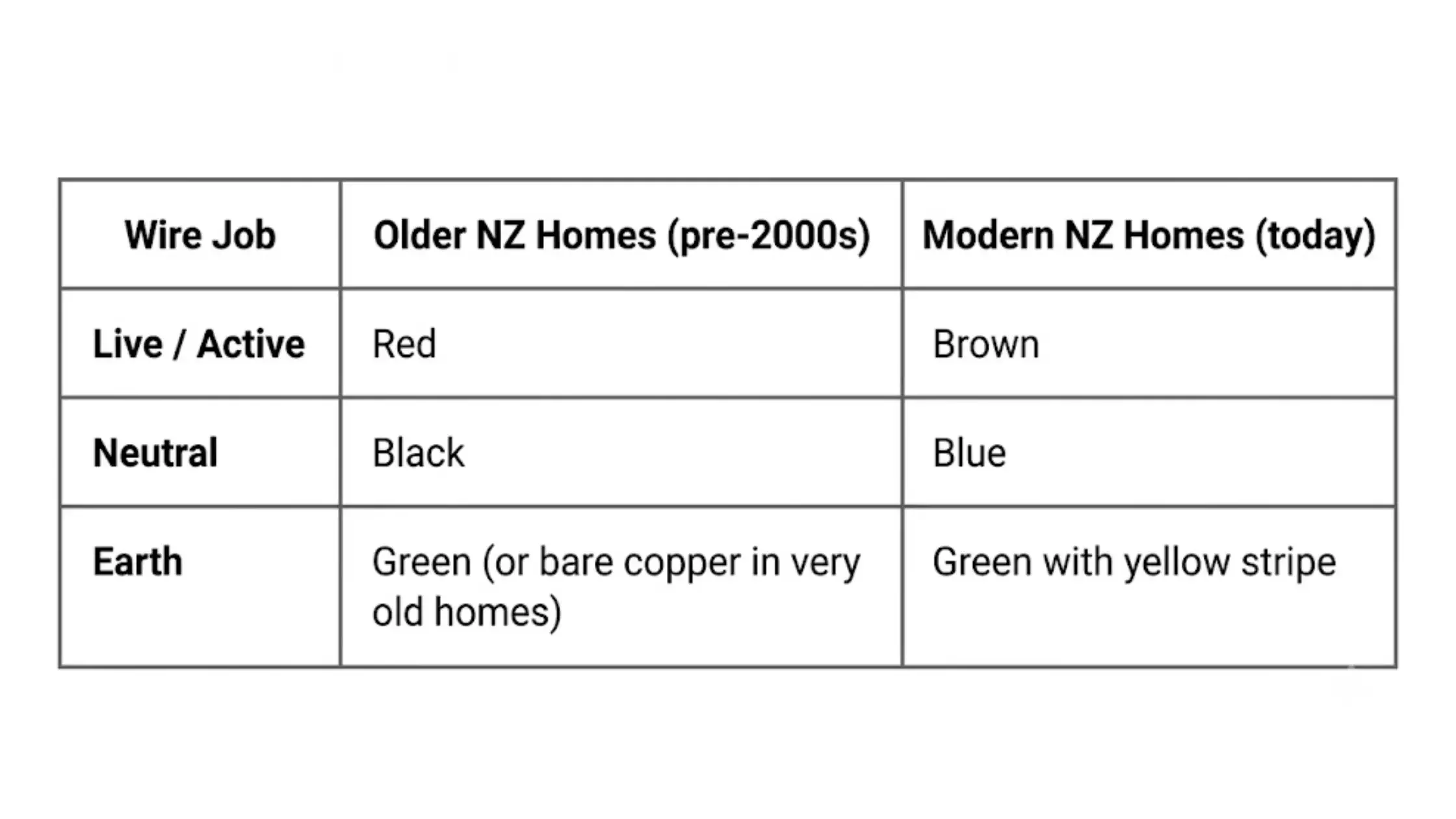
Here is a simple side-by-side look:
Older Homes: Red, Black and Green
If your home was built before the early 2000s, you'll likely see the older set. Red is the live wire, black is neutral, and green is earth. In very old homes, the earth wire might even be bare copper with no colour at all. This wiring is not automatically unsafe — plenty of it was installed properly and still works fine. But it is older, so it deserves a careful look before you start knocking walls about.
Modern Homes: Brown, Blue and Green/Yellow
Newer homes use brown for live, blue for neutral, and green with a yellow stripe for earth. The green-and-yellow earth wire was a clever safety upgrade. Around 7 to 10 percent of men find it hard to tell red from green, so adding the yellow stripe makes the safety wire far easier to spot for everyone.
Three-Phase Wiring: The Bigger Setups
Some larger homes, workshops, and rural properties in Nelson Tasman use three-phase power for heavier loads. In older three-phase systems, you'll often find red, white and blue phase wires. In modern three-phase setups, phases are usually brown, black and grey, with a blue neutral and the familiar green/yellow earth. This is exactly the kind of setup where guessing is a very bad idea — it's a job for a qualified electrician every time.
How Wire Colours Reveal the Age of Your Home's Electrics
Here's something handy: the colours behind your walls are like tree rings. They hint at when your wiring was installed. A home showing only red, black and green is likely running on older wiring. A home with all brown, blue and green/yellow is likely more modern.
But most homes we visit are somewhere in between. Over the years, kitchens get redone, bathrooms get upgraded, and a power point or two gets added. Each little job may have used the colours of that time. So you end up with a patchwork — some old, some new — all living together in the same house. That mix is completely normal. It just means your renovation needs a careful, expert eye before anyone starts connecting things.
If you'd like to understand the bigger picture of ageing wiring, our guide on house rewiring versus an electrical upgrade walks through when each option makes sense.
The Real Renovation Risks of Mixed Wiring
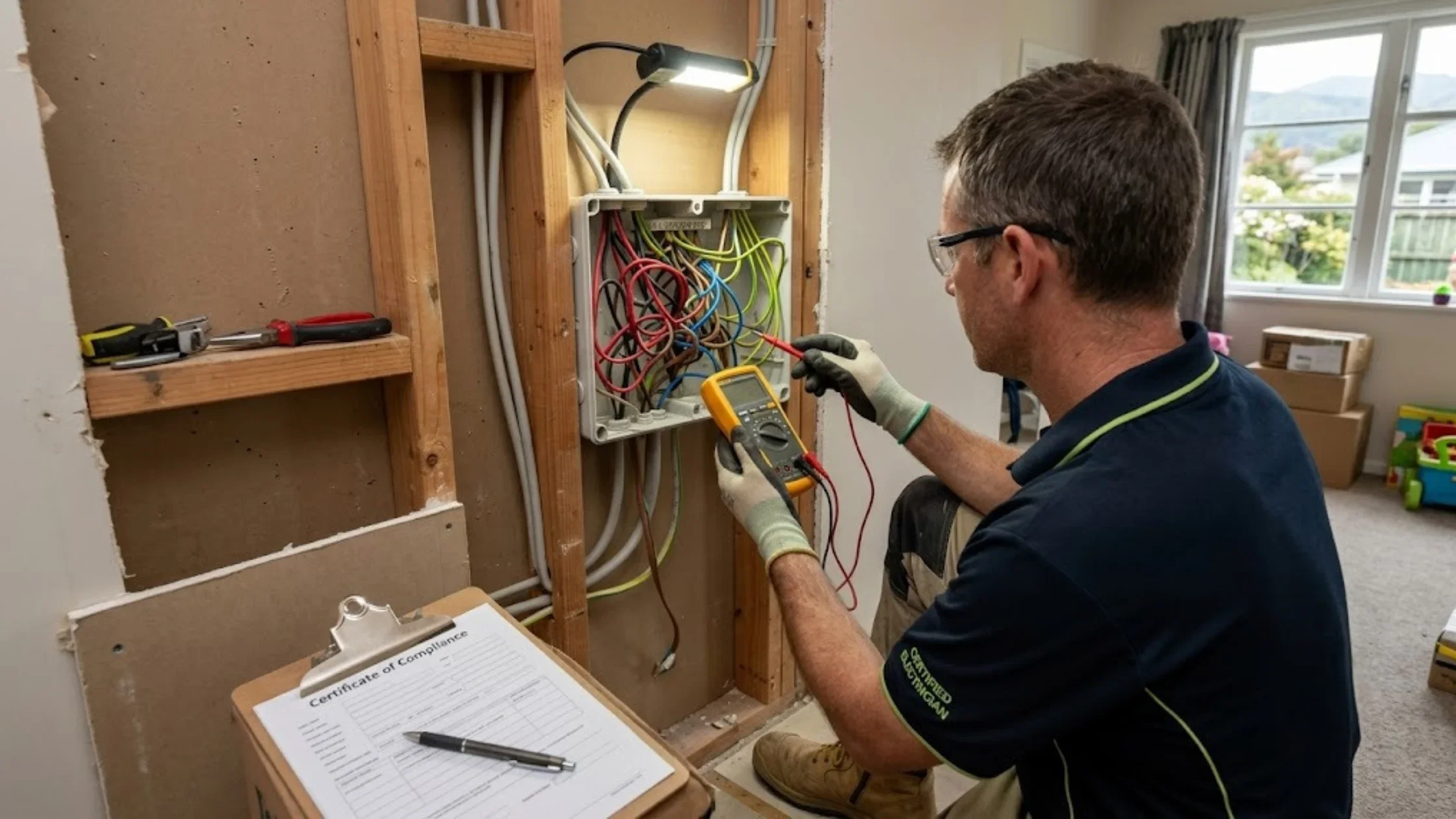
This is where NZ electrical wiring colours truly matter. During a renovation, an electrician often has to join a new cable to an older circuit. When that happens, old and new colours meet inside the same junction box. Get the match right, and everything is safe. Get it wrong, and the danger is serious.
Why Black Is the Trickiest Colour
Black is the colour that catches people out. In older NZ wiring, black means neutral — the return wire. But in some modern three-phase systems, black can be a live phase wire carrying full power. Same colour, completely opposite job. You can see how a quick, confident guess could go very wrong. This single mix-up can energise the metal frame of an appliance or cause a short circuit, and that means shock or fire risk.
Never Trust Colour Alone
Here's the golden rule every good electrician lives by: never trust colour alone. Colours fade. Past work may not have followed the rules. Someone may have used the wrong wire years ago. That's why every wire is tested before it is touched, not just looked at. A licensed electrician uses proper testing tools to confirm each wire's real job before making a single connection. This is exactly the kind of care that keeps your renovation electrical work safe from start to finish.
Compliance: What New Zealand Law Actually Requires
Let's be clear and honest about the rules, because this matters for your safety and your insurance. In New Zealand, working on your home's fixed wiring is not a DIY job. By law, it must be carried out by a registered electrician. This isn't red tape for the sake of it — it's what keeps homes standing and families safe.
All of this sits under AS/NZS 3000, the Wiring Rules we mentioned earlier. New Zealand recently strengthened these rules, too. Under the Electricity (Safety) Amendment Regulations, the updated 2018 version of the standard (with its amendments) has been adopted, and electricians have a transition window running to 12 November 2026 to move fully across to the newest requirements. In plain terms: the safety bar keeps rising, and staying compliant matters more than ever.
There's a paperwork side as well. After proper electrical work, you should receive a Certificate of Compliance (CoC) or an Electrical Safety Certificate (ESC). Keep these safe. They prove your wiring was done to standard — which protects you when you sell your home or make an insurance claim. If you ever hit trouble mid-renovation, our emergency electrician service across Nelson Tasman is there to help.
Why This Matters for Your Nelson Tasman Renovation
So why should you care about all of this before your renovation starts? Because getting the wiring right protects three things you value most: your safety, your home, and your money.
Booking a proper wiring check early means surprises get found before they cost you. You avoid dangerous mix-ups, tick every compliance box, and get honest advice on whether a simple upgrade will do or whether a bigger full-house rewiring is the smarter long-term choice. It also means your new kitchen, bathroom, or extra power points are wired to today's standard from day one.
Our local team knows Nelson Tasman homes inside out — from older cottages with red-and-black wiring to modern builds. Whether you need kitchen and bathroom electrical upgrades or fresh power point installation, the same care goes into every job. Good wiring can even lift your property's value, as we explain in our post on electrical upgrades and home value.
Get Your Wiring Checked Before You Renovate
Don't let a hidden wire colour turn your dream renovation into a costly headache. The safest, simplest move is to have a licensed electrician look before you leap.
The friendly team at Mako Electrical offers trusted residential electrical services right across Nelson Tasman. We'll check your wiring, explain what we find in plain English, and make sure every part of your renovation is safe and compliant.
Ready to start? Get in touch with Mako Electrical today — and renovate with total peace of mind.
Small Colours, Big Difference
It's easy to look at the wires behind your wall and see nothing but a mess of colours. But those colours carry a story — the story of when your home was wired and how safe it is to work on today. Old red-and-black or modern brown-and-blue, each one is a clue, and each one matters the moment a renovation begins.
The good news is you don't have to figure it out on your own. Knowing the difference between older and modern NZ electrical wiring colours helps you ask the right questions. Leaving the actual work to a trusted local electrician keeps you, your family, and your home safe. When you're ready to renovate in Nelson Tasman, let Mako Electrical make sure every wire is exactly where it should be.
Frequently Asked Questions
-
In modern New Zealand homes, the live (active) wire is brown, the neutral wire is blue, and the earth wire is green with a yellow stripe. These follow the AS/NZS 3000 Wiring Rules, which line New Zealand up with international standards. The colours make each wire's job clear at a glance, helping electricians work safely and keeping your home's wiring consistent and easy to service.
-
In older New Zealand homes, usually built before the early 2000s, the live wire is red. The neutral is black and the earth is green. This older colour set is not automatically unsafe if it was installed correctly, but it does show your wiring is older. Before any renovation, it's wise to have a registered electrician check that older wiring meets today's safety standards.
-
New Zealand changed its wiring colours in the early-to-mid 2000s to match international standards used across Europe and beyond. The switch made wiring clearer and safer, and reduced confusion for electricians working across different regions. The wires' jobs never changed — only the colours did. Red became brown for live, and black became blue for neutral, under the AS/NZS 3000 Wiring Rules.
-
Yes, and it's very common. Many New Zealand homes have been renovated in stages over the years, so a kitchen or bathroom redone at different times may use different colours. This creates a mix of old and new wiring in one house. Mixed wiring is where most renovation risks hide, so it should always be checked and connected by a registered electrician, never guessed at.
-
Not automatically. If older red-and-black wiring was installed correctly and remains in good condition, it can still be safe to use. The risk comes from age, wear, and mixing it wrongly with modern wiring during renovations. Because standards have improved a lot over the years, it's smart to have a licensed electrician inspect older wiring before you renovate or upgrade your Nelson Tasman home.
-
AS/NZS 3000 is the shared electrical standard for New Zealand and Australia, often called the Wiring Rules. It sets out how wiring must be installed, including which colour each wire should be. Following it keeps installations safe, consistent, and legal. New Zealand recently adopted the updated 2018 version, with electricians moving fully across to its latest requirements by 12 November 2026.
-
Black is confusing because its meaning changed. In older NZ wiring, black is the neutral (return) wire. But in some modern three-phase systems, black can be a live phase wire carrying full power. Same colour, opposite job. Mixing these up during a renovation can energise appliances or cause a short circuit. That's why electricians always test every wire rather than trusting the colour alone.
-
No. In New Zealand, work on your home's fixed wiring must legally be carried out by a registered electrician. This rule protects your safety and your insurance cover. DIY electrical work is dangerous and can void your home insurance. You can plan and design your renovation freely, but leave the actual wiring to a licensed professional like the Mako Electrical team in Nelson Tasman.
-
The wire colours give a strong clue. A home showing only red, black and green wiring is likely older, while all brown, blue and green/yellow suggests more modern wiring. A mix points to staged renovations over the years. For a proper answer, book a registered electrician to inspect your switchboard and wiring. They can confirm the age, condition, and safety of your system.
-
Yes. After proper electrical work in New Zealand, you should receive a Certificate of Compliance (CoC) or an Electrical Safety Certificate (ESC). These documents prove the work meets the required safety standard. Keep them safe, as they matter when selling your home or making an insurance claim. Mako Electrical provides the right paperwork with every job across Nelson Tasman.
