

QUICK ANSWER
For most NZ homes, interconnected photoelectric smoke alarms give the best protection, because when one detects smoke every alarm sounds. Hardwired smoke alarms run on 230 V with battery backup and suit new builds and rewires. Wireless interconnected 10-year alarms suit existing homes. Fit them in every bedroom, living space, hallway and landing.
KEY TAKEAWAYS
Since 1 July 2016, any new or replacement smoke alarm in a New Zealand rental must be photoelectric and either have a battery life of at least eight years or be hardwired.
NZ rental law requires a working smoke alarm within 3 metres of each bedroom door (or in every room where someone sleeps), on every level of the home, and in any sleep-out or self-contained caravan.
Since November 2024, the NZ Building Code's acceptable solution for houses requires interconnected smoke alarms to NZS 4514:2021 in new homes and consented building work, placed in all bedrooms, living spaces, hallways and landings.
Interconnection can be wired or wireless, so an existing home can be upgraded to interconnected alarms without new cabling.
Fire and Emergency New Zealand recommends long-life photoelectric alarms because they detect slow, smouldering fires better than ionisation alarms.
Hardwired (230 V) smoke alarms must be installed or replaced by a licensed electrician.
It's 2am in a two-storey Stoke home. A heater fault starts smouldering in the downstairs lounge. The smoke alarm in the lounge goes off, but upstairs, behind closed bedroom doors, nobody hears it.
That gap is exactly what hardwired smoke alarms and interconnected systems are designed to close. Fire and Emergency New Zealand warns that a house fire can become unsurvivable in under three minutes, so the seconds between the first alarm and everyone hearing it matter.
If you own an older villa in The Wood, are renovating a bungalow in Richmond, or manage a rental in Motueka, you've probably asked: are hardwired smoke alarms in NZ worth it over battery ones, and where should they actually go? This guide answers both, with a side-by-side comparison, the current placement rules and what landlords legally need to do.
What Is an Interconnected Smoke Alarm?
An interconnected smoke alarm is a smoke alarm linked to every other alarm in the home, so when one detects smoke, all of them sound at once. The link can be a physical cable (wired interconnection) or a radio signal between units (wireless interconnection).
A hardwired smoke alarm is a different thing: it describes how the alarm is powered. Hardwired alarms connect to your home's 230 V supply and include a backup battery so they keep working during a power cut. Many hardwired alarms are also wired together for interconnection, but "hardwired" and "interconnected" aren't the same, and it's worth keeping them separate when you're comparing options.
Why photoelectric matters
Fire and Emergency New Zealand recommends long-life photoelectric smoke alarms. Photoelectric smoke alarms detect visible smoke particles using a light sensor, which makes them far more responsive to slow, smouldering fires that can burn for hours before flames appear. Older ionisation alarms are better at fast, flaming fires but slower on smouldering ones, which are common at night. Every option in the comparison below assumes a photoelectric sensor.
Battery, 10-Year Sealed, Hardwired or Wireless: Which Is Best?
For new builds and full rewires, hardwired interconnected alarms are usually the best long-term choice. For existing homes, wireless interconnected 10-year alarms give near-identical protection without opening walls or ceilings. Old replaceable-battery alarms should be phased out.
| Feature | Replaceable- battery alarm |
10-year sealed (standalone) |
Hardwired 230 V, interconnected |
Wireless interconnected (10-year lithium) |
|---|---|---|---|---|
| Power source | 9 V or AA battery | Sealed lithium battery | Mains power + built-in backup battery | Sealed lithium battery |
| Battery changes | Usually yearly | None for the alarm's life | None (backup is built in) | None for the alarm's life |
| All alarms sound together? | No | No | Yes | Yes |
| Installation | DIY | DIY | Licensed electrician required | DIY-capable; electrician recommended for system set-up and testing [VERIFY] |
| Meets rental rules for new/replacement alarms? | No | Yes | Yes | Yes |
| Meets Building Code for new homes / consented work? | No | No | Yes, when installed to NZS 4514 | Yes, when installed to NZS 4514 |
| Disruption to the home | None | None | Cabling through ceilings and walls | Minimal |
| Best suited to | Replacing as soon as practical | Rentals and smaller single-level homes | New builds, renovations with open ceilings, full rewires | Existing homes, multi-storey houses, upgrades without rewiring |
Replaceable-battery alarms
These are the cheapest units at the hardware store and the least reliable over time. Batteries go flat, get "borrowed" for the TV remote or are pulled out after a burnt-toast false alarm. They can no longer be used as new or replacement alarms in rentals.
10-year sealed photoelectric alarms
A sealed lithium battery runs the alarm for its full rated life, and then you replace the whole unit. They're the minimum standard for rentals and a solid choice for a small, single-level home. Their limitation is that each alarm works alone. If the alarm that detects smoke is at the other end of the house, you may not hear it.
Hardwired interconnected alarms
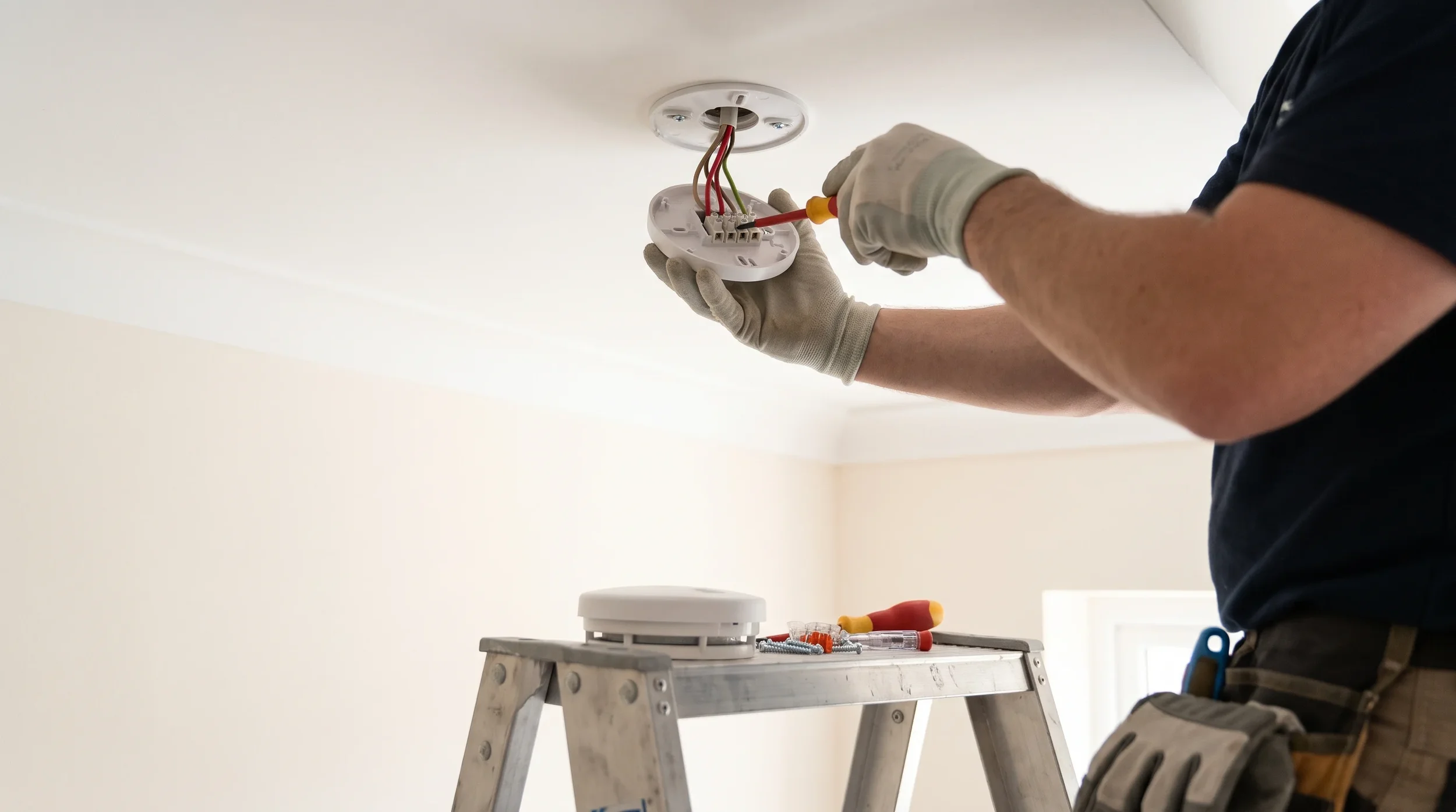
Hardwired smoke alarms draw power from your switchboard, carry a non-removable backup battery and, when wired together, sound in unison. There are no batteries to forget, and the system can be integrated with other devices such as heat alarms in kitchens or garages. Because they connect to 230 V, installation must be done by a licensed electrician and documented with the appropriate electrical certification.
Wireless interconnected alarms
These battery-powered photoelectric alarms talk to each other by radio signal. They deliver the main benefit of interconnection, whole-home warning, without running new cables. Interconnection must be on the same brand and system, so mixing brands usually isn't possible.
Where Should Smoke Alarms Go in Your Home?
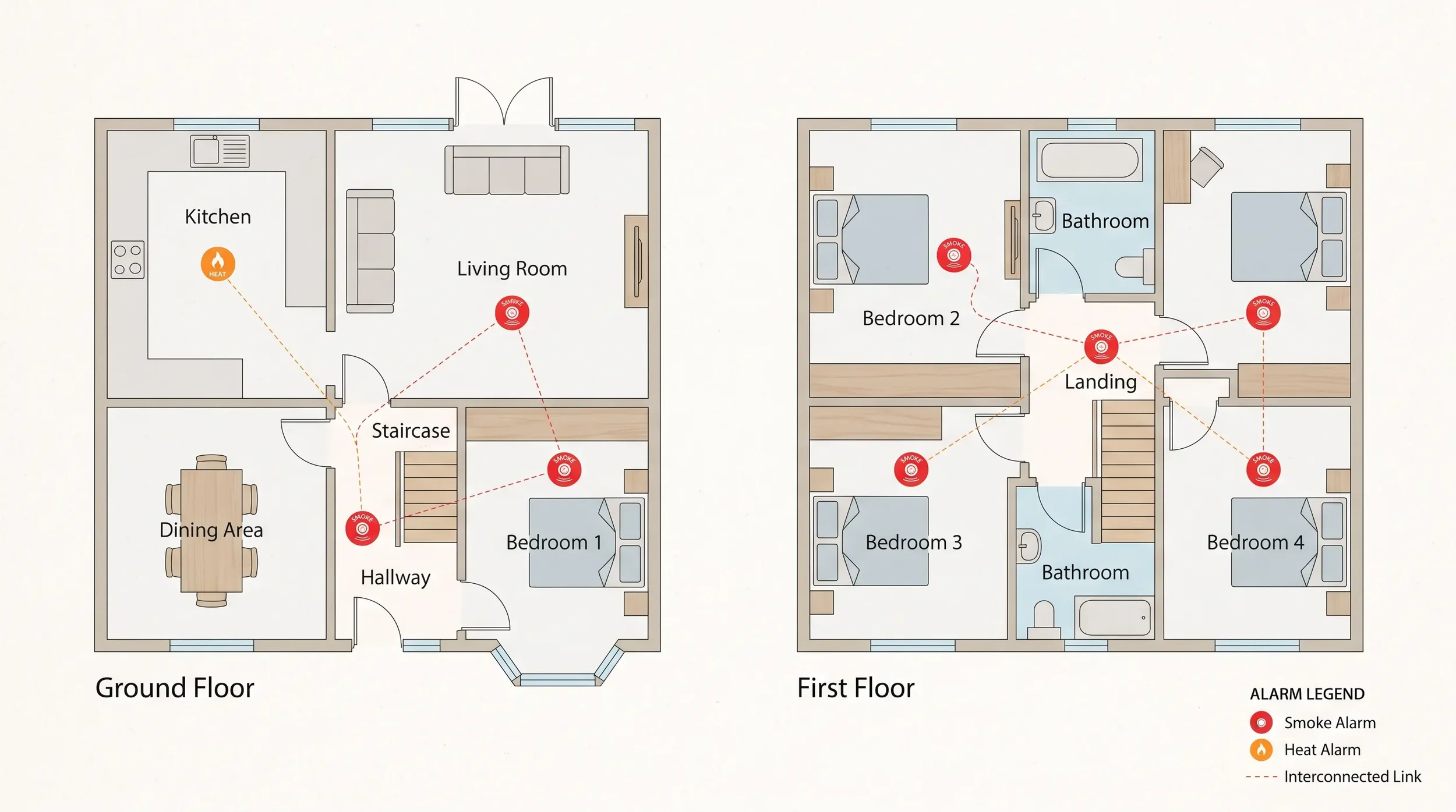
Install smoke alarms in every bedroom, living space, hallway and landing, with at least one on every level. That's the current Building Code standard for new homes and the layout Fire and Emergency New Zealand recommends for every home. Rental law sets a lower legal minimum, covered further down.
A practical layout for a typical Nelson Tasman home:
Every bedroom. Many fires start while people are asleep, and closed doors block smoke from reaching hallway alarms.
Hallways connecting bedrooms to the rest of the house. This is your escape route.
Living spaces, including lounges, family rooms and dining areas.
Landings and every level, even a level where nobody sleeps.
Kitchens that can be closed off from living areas and hallways by doors. Use a heat alarm here instead of a smoke alarm to avoid nuisance alarms from cooking.
Garages, laundries and sleep-outs with a heat alarm where steam, dust or fumes would set off a smoke alarm. Self-contained sleep-outs need their own smoke alarm.
Mounting tips that make a real difference
Ceiling first. Smoke rises, so the ceiling is the preferred position. Keep alarms out of the "dead air" corner where wall meets ceiling.
Wall mounting is allowed in some situations, but follow the manufacturer's instructions and NZS 4514 distances from the ceiling.
Sloped and raked ceilings, common in Nelson's mid-century and architectural homes, need alarms positioned near (but not right at) the apex.
Keep away from bathrooms, laundries, heat pump outlets, rangehoods and windows that are often left open.
What Do NZ Rental Laws Require for Smoke Alarms?
Landlords must provide working smoke alarms within 3 metres of each bedroom door or in every room where someone sleeps, on every level of the home, and in any sleep-out or self-contained caravan. Any new or replacement alarm must be photoelectric and have a battery life of at least eight years, or be hardwired.
The Residential Tenancies (Smoke Alarms and Insulation) Regulations 2016 set out the detail:
At the start of every tenancy, all smoke alarms must be working, including their batteries.
During the tenancy, the landlord must keep alarms in working order, and replace them at the manufacturer's expiry date, or once they're more than eight years old where no date is shown.
Tenants must not damage, remove or disconnect an alarm, should replace batteries where the alarm has replaceable batteries, and must tell the landlord about faults.
Access: landlords can enter to meet smoke alarm obligations with 24 hours' notice, between 8am and 7pm.
Penalties: failing to meet smoke alarm obligations is an unlawful act with a maximum penalty of $4,000.
These are minimums. Fire and Emergency New Zealand encourages landlords to go further and fit alarms in every bedroom, hallway and living area. For landlords with older properties around Nelson, Tahunanui and Richmond, moving to interconnected alarms during a vacancy or renovation is one of the simplest ways to reduce risk and future maintenance calls. If you're also reviewing the rest of the electrical safety picture in an older rental, our guide on where to prioritise RCD installation in older NZ homes covers the next layer of protection.
Do New Builds and Renovations Need Interconnected Smoke Alarms?
Yes. Since November 2024, new homes and building work that needs a consent must include interconnected smoke alarms installed to NZS 4514:2021. The interconnection can be wired or wireless.
The Ministry of Business, Innovation and Employment updated the Building Code acceptable solutions for fire safety (C/AS1, C/AS2 and F7/AS1) in November 2023, with a 12-month transition period that ended on 1 November 2024. The acceptable solution for houses now requires a Type 1 domestic smoke alarm system, which means interconnected alarms in all bedrooms, living spaces, hallways and landings, with at least one alarm per level.
Before this change, the Building Code required standalone alarms in escape routes near sleeping areas, with no need for them to be linked.
What this means in practice:
Building new? Plan your alarm layout with your electrician at the design stage, so cabling goes in before linings. It's one of the key questions in our checklist of what to ask your new build electrician before construction starts.
Renovating with a consent? Your building consent authority (Nelson City Council or Tasman District Council) will check that the interconnected system is specified. Exactly which alterations trigger the requirement depends on the scope of work, so confirm early. [VERIFY with Nelson City Council / Tasman District Council building teams]
Open ceilings are an opportunity. If a renovation exposes ceiling cavities, that's the cheapest moment to install hardwired interconnected alarms. Our renovation electrical services page outlines how we fit this into a broader project.
Are Hardwired Smoke Alarms in NZ Worth It for an Existing Home?
If your home has more than one bedroom, multiple levels or long hallways, an interconnected upgrade is worth it, even though existing homes aren't legally required to have one. It's the single biggest improvement you can make to how early everyone in the house hears a fire.
Ask yourself:
Could you hear the lounge alarm from your bedroom with the door shut and a heat pump running?
Are any of your alarms older than their replace-by date, or with no date at all?
Do you have bedrooms on a different level, or a sleep-out that kids or guests use?
Are you about to rewire, upgrade your switchboard or renovate a room?
If you answered yes to any of these, it's time to review your alarms. A full house rewire or major renovation is the ideal moment to go hardwired. Otherwise, wireless interconnected alarms are a fast, low-disruption upgrade.
Smoke Alarm Facts for Nelson Tasman Homeowners
These points summarise how smoke alarms work under current New Zealand rules and practice:
Interconnected smoke alarms are linked by cable or radio so that when one alarm activates, every alarm in the household unit sounds.
Hardwired smoke alarms in New Zealand run on 230 V mains power with a built-in backup battery, and must be installed by a licensed electrician.
Photoelectric smoke alarms are recommended by Fire and Emergency New Zealand because they respond faster to smouldering fires than ionisation alarms.
NZS 4514:2021 is the New Zealand Standard for interconnected smoke alarms in houses, cited by the Building Code acceptable solutions since November 2024.
Rental homes need a smoke alarm within 3 metres of each bedroom door or in each sleeping room, plus one per level and one in each sleep-out or caravan.
Heat alarms, not smoke alarms, are the right choice for kitchens, garages and laundries where cooking fumes, steam or dust cause false alarms.
Smoke alarms wear out. Replace each unit at its expiry date, and test alarms regularly using the test button.
In our experience at Mako Electrical, the most common problem we find in older Nelson Tasman homes isn't a missing alarm. It's an alarm that's past its replace-by date, mounted in a dead-air corner, or a long way from the bedrooms it's supposed to protect.
What Good Looks Like: How Mako Electrical Approaches Smoke Alarm Installation
When we install or upgrade smoke alarms across Nelson, Richmond, Motueka and the wider Tasman region, the process is straightforward:
Walk-through. We map bedrooms, living spaces, hallways, landings and any sleep-outs, and note ceiling types and access.
Recommend the right system. Hardwired for new builds, rewires and open ceilings; wireless interconnected where cabling would mean unnecessary disruption.
Install to the Standard. Positioning follows NZS 4514 and the manufacturer's instructions, with heat alarms where smoke alarms would cause nuisance alarms.
Test the whole system. We trigger alarms to confirm every unit sounds together.
Certify and explain. Hardwired work comes with the right paperwork. Our guide to Certificates of Compliance in NZ explains what you should receive. We also show you how to test and silence the system.
Common mistakes to avoid: mixing brands that can't interconnect, putting smoke alarms in kitchens or bathrooms, fitting alarms on the wall right at the ceiling line, and keeping alarms well past their expiry date.
Book Smoke Alarm Installation in Nelson Tasman
Summer is a good time to sort this out: before the holidays bring guests into spare rooms and sleep-outs, and before tenancy changeovers in the new year. Whether you want hardwired smoke alarms for a new build, a wireless interconnected upgrade for an existing home, or a compliance check for a rental, Jordan and the Mako Electrical team can help.
Have a look at our residential electrical services in Nelson, or get in touch for a free quote. Choosing hardwired or interconnected smoke alarms in NZ is one of the most cost-effective safety decisions you can make for your family or tenants.
Frequently Asked Questions
-
Most photoelectric smoke alarms are designed to last around 10 years, after which the whole unit must be replaced, not just the battery. Each alarm should show a manufacture or replace-by date on the back. In rentals, an alarm with no date must be replaced once it is more than eight years old. If you can't find a date, treat the alarm as due for replacement.
-
No. Hardwired smoke alarms connect to your home's 230 V supply, which makes their installation prescribed electrical work in New Zealand. A licensed electrician must install or replace them and provide the correct certification. Battery-powered alarms, including many wireless interconnected models, can be fitted by a homeowner, though an electrician can help design and test a full system.
-
Yes. Hardwired smoke alarms include a built-in backup battery that keeps them working during a power cut. In most current models, this backup battery is sealed and lasts for the life of the alarm. That makes them well suited to rural Tasman properties where outages during storms are more likely.
-
Usually not. Interconnection relies on each brand's own wiring signal or radio protocol, so alarms from different manufacturers generally won't talk to each other. When adding to an existing interconnected system, match the brand and model range already installed, or replace the whole system so every unit is compatible.
-
A regular chirp usually means a low battery, a backup battery fault in a hardwired unit, or an alarm that has reached its end of life. Some models chirp differently for each issue, so check the manufacturer's guide. Dust inside the sensor chamber can also trigger faults. If a sealed or hardwired alarm keeps chirping, it's normally time to replace it.
-
Not usually. Cooking fumes and steam cause frequent false alarms, which tempt people to disable them. Where a kitchen can be closed off from living areas and hallways by doors, the Building Code approach is to fit an alarm suited to kitchens, typically a heat alarm. Place a smoke alarm in the nearby living area or hallway instead.
-
Press the test button regularly. Many manufacturers recommend monthly, and Fire and Emergency New Zealand encourages testing at least every six months. Daylight saving changes are a handy reminder. On an interconnected system, every alarm should sound when you test one. If any unit stays silent, it needs checking or replacing.
-
No, not under current tenancy law. Rental properties must have photoelectric alarms with at least an eight-year battery life, or hardwired alarms, in the required locations. Interconnection isn't a tenancy requirement, but if a landlord does consented building work, the Building Code requirement for interconnected alarms may apply to that work.
-
A smoke alarm detects smoke particles and gives the earliest warning in bedrooms, hallways and living spaces. A heat alarm responds to a rapid rise in temperature or a fixed high temperature, so it ignores steam and cooking fumes. Heat alarms suit kitchens, garages and laundries, and many interconnected systems can link both types.
-
They are if you're rewiring, renovating or already opening ceilings, because cabling costs less when access is easy. If your older home has finished ceilings and no other electrical work planned, wireless interconnected alarms give similar whole-home warning with far less disruption. A local electrician can assess roof-space access in villas and bungalows and recommend the better fit.
