
Why Do NZ Electrical Wiring Colours Matter During Renovations?
Not All Wires Are Created Equal
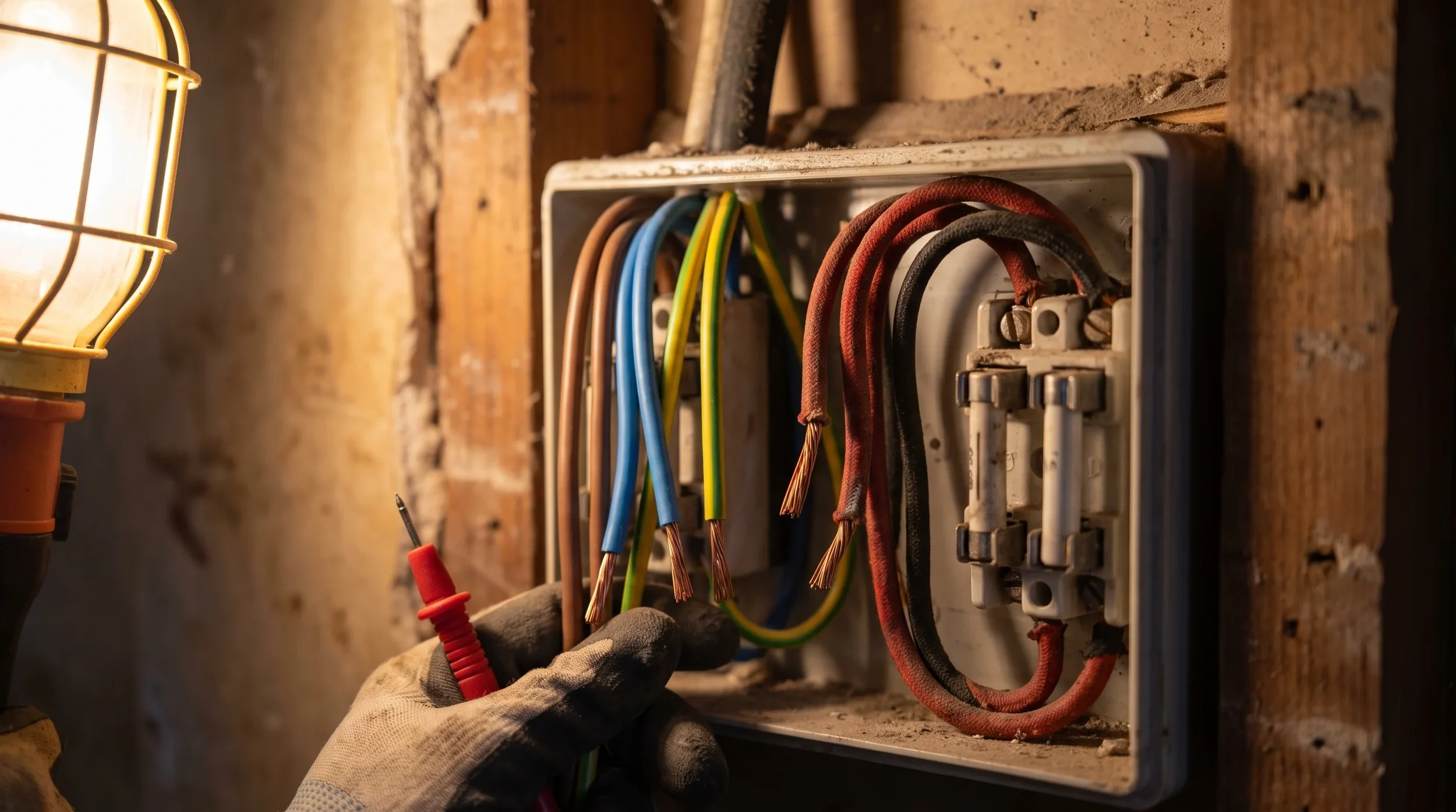
Here's the honest problem: a lot of Nelson and Tasman homes have more than one "generation" of wiring behind their walls, and the colours don't always mean what you think they mean. If you're pulling up floorboards or opening a wall cavity mid-renovation and you spot red and black cable sitting next to brown and blue, you're not imagining things — and you shouldn't guess which is which.
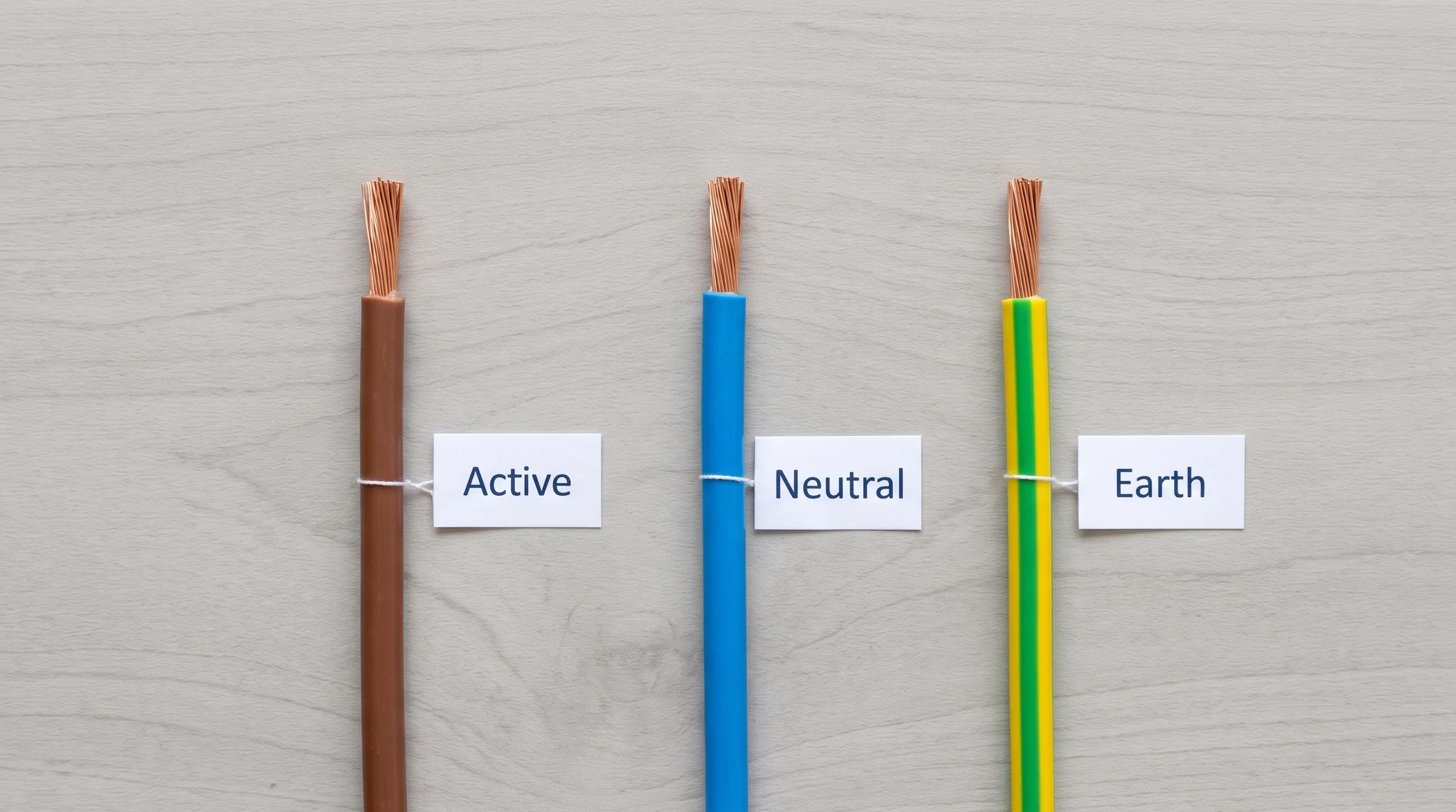
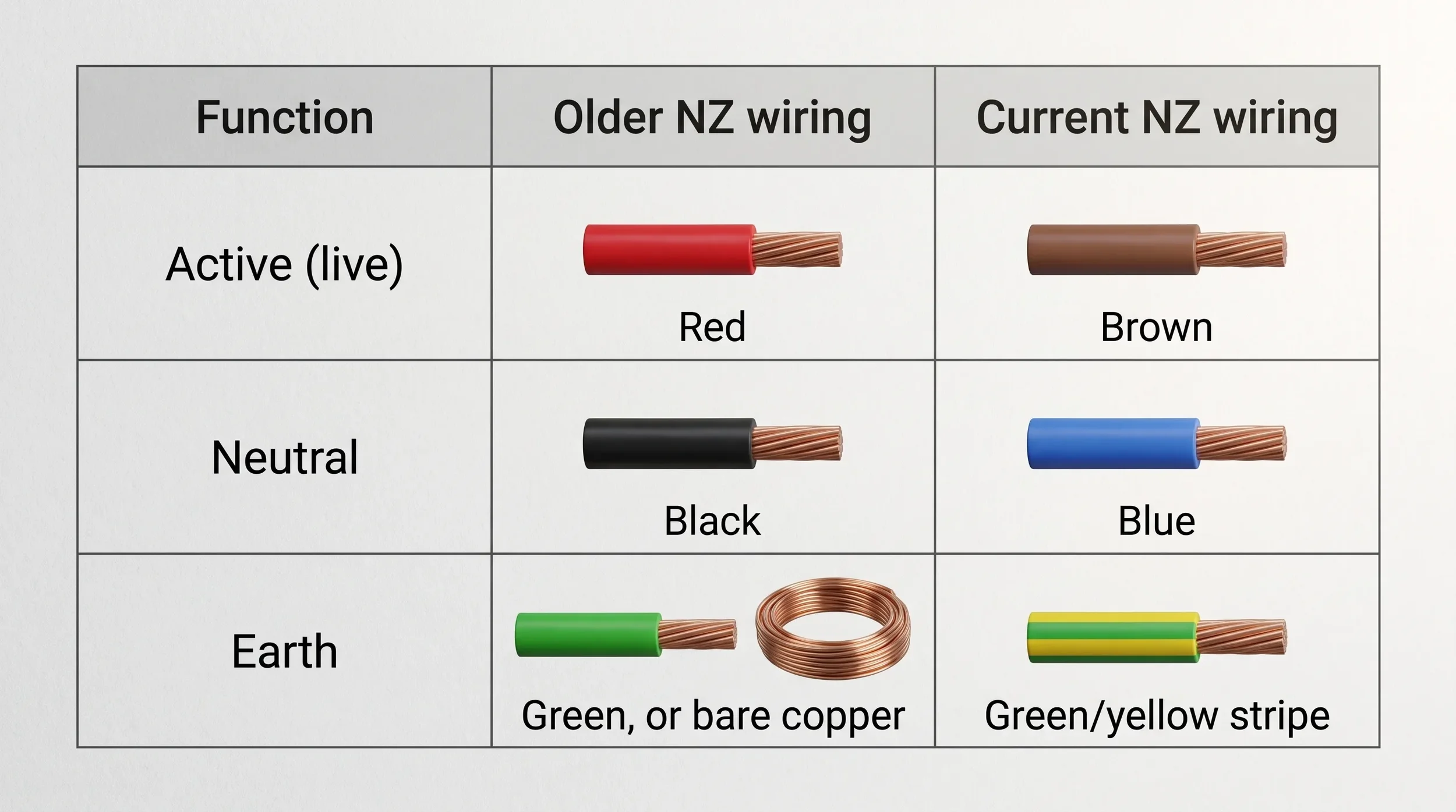
Modern New Zealand wiring uses brown for active (live), blue for neutral, and green/yellow for earth, under AS/NZS 3000. Older homes — plenty of them right here in Nelson's villa and bungalow stock — were wired with red for active, black for neutral, and plain green (or bare copper) for earth. The two systems look completely different, and it's genuinely dangerous to assume a colour means the same thing in both. If your renovation uncovers a mix of the two, the safest and cheapest fix is a proper inspection before any new fittings go in, not after.
Key Takeaways
Current NZ wiring uses brown (active), blue (neutral), and green/yellow (earth) under AS/NZS 3000.
Older NZ homes, including many Nelson villas and bungalows, used red (active), black (neutral), and green or bare copper (earth).
Black wire is not automatically neutral in every system — never assume, always test.
Mixed old-and-new wiring in the same property is common during renovations and is where most risk hides.
Licensed electricians must carry out fixed wiring work in NZ; colour identification is one part of a proper safety process.
A pre-renovation wiring check-up is cheaper and safer than discovering issues mid-build.
AS/NZS 3000:2018 becomes the mandatory Wiring Rules edition from 12 November 2026 — a separate compliance deadline, not a colour change.
What NZ Electrical Wiring Colours Actually Tell You
Electrical wiring colours are simply New Zealand's way of labelling what each wire does inside a cable — which one carries power in, which one carries it back out, and which one is there purely to protect you if something goes wrong. It sounds like a small detail, but it's the difference between an electrician working safely and confidently, and someone getting badly hurt because a wire wasn't what they expected it to be.
This matters most during renovations because renovations are exactly when old and new wiring end up next to each other. You might be adding a power point in a kitchen that still has its original 1970s circuit, or extending lighting into a hallway that was rewired only five years ago. Knowing what the colours mean — and why they changed — helps you ask your electrician the right questions and understand what's actually happening behind your walls.
What Do NZ Electrical Wire Colours Mean Today vs in Older Homes?
This is the question we get asked most often on-site, so let's answer it plainly.
Current standard (AS/NZS 3000):
Brown = active (the wire carrying power from the switchboard)
Blue = neutral (the return path back to the switchboard)
Green with a yellow stripe = earth (the safety wire that protects you if a fault occurs)
Older NZ wiring, common in pre-renovation Nelson villas and bungalows:
Red = active
Black = neutral
Green (solid), or sometimes bare copper = earth
Here's the safety warning worth repeating: black does not mean the same thing in both systems. In the old system, black was neutral. In some newer flexible cords and appliance wiring overseas, black can mean active. If a renovation exposes both eras in the same switchboard or ceiling cavity, colour alone is no longer a reliable guide — and this is exactly the kind of mixed system that catches out even confident DIYers. It's one of the main reasons NZ law limits fixed wiring work to licensed electricians rather than handymen or confident DIYers; a five-minute misidentification can mean a shock, a fire risk, or a failed inspection down the track.
Why This Comes Up So Often During Renovations
Nelson has a lot of character homes — villas, bungalows, and post-war cottages — and character usually means at least one earlier round of electrical work sitting underneath the current layer. When you open a wall for a new kitchen island, add downlights, or move a switchboard, you're not just adding new cable. You're often reconnecting into a circuit that was last touched decades ago.
This is where colour coding becomes genuinely useful rather than just technical trivia. A licensed electrician reading old red-and-black wiring knows immediately they're dealing with a pre-harmonisation circuit and adjusts their approach — testing before touching, checking earthing arrangements, and flagging anything that needs upgrading rather than simply extending. That's the value of experience: it's not about memorising a colour chart, it's about knowing what each combination of colours is trying to tell you about the age, condition, and safety margin of the circuit you're working on. Our piece on what a master electrician's certification actually covers goes into more detail on why this kind of judgement matters as much as the qualification itself.
If you're not sure what's inside your own switchboard yet, our beginner-friendly guide on how to read your switchboard is a good place to start before your electrician arrives.
Key Benefits of Getting Your Wiring Colours Right Before You Renovate
Understanding — and properly identifying — your home's wiring colours before renovation work starts pays off in a few concrete ways. It reduces the chance of a licensed electrician finding a nasty surprise mid-job, which usually means fewer unexpected costs and delays. It also protects your Certificate of Compliance: work signed off against wiring that wasn't correctly identified can create issues later, particularly if you go to sell the property. And, most importantly, it keeps everyone on site safe, from your electrician to your builder to your family living in the house while work is underway.
If your renovation plans include a full house rewire or even a partial switchboard upgrade, getting an accurate picture of what's currently in the walls is the first real step — not an afterthought once the reno is already underway.
Common Renovation Scenarios Where This Trips People Up
A few situations come up again and again on Nelson renovation jobs:
Adding a power point to an old circuit. You want one more outlet in a hallway, and the existing wiring is red-and-black. It looks simple, but the electrician first has to confirm the circuit's condition and earthing before extending it — this is a normal, sensible step, not upselling.
Uncovering unlabelled cable during demolition. Builders often expose wiring that isn't on any plan, sometimes alongside other era-specific surprises like old asbestos switchboard backing boards. Without knowing the colour history, it's tempting to assume and reconnect — this is precisely the kind of shortcut that leads to callbacks and, in the worst cases, injuries. If you're seeing other warning signs alongside the old wiring, our guide to unsafe electrical outlets in older homes is worth a read too.
Mixing tradespeople across a long renovation. If your reno stretches over months, different sparkies (or the same one, returning after a gap) need a consistent, accurate record of what's been done and what colours were used where. This is part of why inspections and proper documentation matter more than they might seem to at the outset.
For a broader look at what else tends to go wrong during renovation electrics — beyond colour confusion — our guide on electrical renovation mistakes covers the other common traps.
What This Means for Your Renovation Timeline
Bringing an electrician in early — ideally before demolition, not after — gives them time to trace circuits, identify colour generations, and flag anything that needs attention while it's still cheap to change. Waiting until walls are already open under time pressure is when corners get cut, simply because nobody wants to hold up a builder's schedule. If you're planning a kitchen or bathroom renovation specifically, our kitchen and bathroom electrical considerations guide walks through the extra rules that apply around water, zones, and wet areas.
There's also a compliance deadline worth knowing about if your renovation is likely to stretch into next year: AS/NZS 3000:2018, with its amendments, becomes the mandatory reference edition of the Wiring Rules, with a transition window closing on 12 November 2026. It doesn't change the colour code itself, but it does tighten some of the rules electricians must follow — one more reason to get a licensed professional involved rather than treating wiring as a DIY afternoon.
Get a Professional Wiring Check-Up
If your renovation has already uncovered wiring you're not sure about — or you'd simply rather know before you start pulling up floorboards — Mako Electrical can trace, test, and safely identify every circuit in your home. We work across Nelson and Tasman on everything from single power point additions to full house rewires, and we'll always tell you plainly what we find, what it means, and what (if anything) needs doing. Get in touch with our team to book a pre-renovation wiring check and renovate with confidence, not guesswork.
Getting Your Renovation's Wiring Colours Right, Once and For All
Wiring colours aren't decoration — they're a safety language, and it's one that's changed once in New Zealand's history. If your renovation touches a home built before the harmonised colour code came in, expect to find red, black, and plain green sitting alongside brown, blue, and green/yellow, sometimes in the very same switchboard. Treat that discovery as useful information, not a problem to paper over: it tells your electrician exactly how carefully to proceed. Get a proper check done early, keep good records as the work progresses, and you'll come out the other side of your renovation with wiring that's not just tidy behind the walls, but genuinely safe for everyone living in the house.
Frequently Asked Questions
-
Current NZ wiring uses brown for active (live), blue for neutral, and green with a yellow stripe for earth, under AS/NZS 3000. These are known as the "harmonised" colours and apply to new fixed wiring installations across the country, including in Nelson and Tasman homes.
-
The current standard is AS/NZS 3000, often called the Wiring Rules. It sets brown for active, blue for neutral, and green/yellow for earth as the required colours for new fixed wiring, along with rules for cable sizing, switchboard layout, and safe installation practice.
-
A simple two-row chart is enough: older wiring uses red (active), black (neutral), and green or bare copper (earth); current wiring uses brown (active), blue (neutral), and green/yellow (earth). If you're unsure which applies to your home, a licensed electrician can confirm it on-site.
-
Residential cable in New Zealand follows AS/NZS 3000: brown for active, blue for neutral, and green/yellow stripe for earth. Multi-core cables used in homes, like standard TPS, are manufactured to this same colour code so electricians can identify each conductor at a glance.
-
Reputable NZ electrical wholesalers and manufacturers all supply cable manufactured to the AS/NZS 3000 colour code as standard. Rather than sourcing wire yourself, it's safer and often cheaper overall to have your licensed electrician supply and fit compliant cable as part of the job.
-
Old NZ wiring used red for active, black for neutral, and green or bare copper for earth. The current regulations under AS/NZS 3000 use brown, blue, and green/yellow instead. Older wiring that was compliant when installed can usually stay in place, but any new work must follow today's colours.
-
They don't — New Zealand and Australia share the same harmonised colour code under AS/NZS 3000: brown for active, blue for neutral, and green/yellow for earth. The standard is a joint one, which is why you'll see identical colour coding on both sides of the Tasman.
-
Compliant AS/NZS 3000 cable is available through licensed electrical wholesalers, but fixed wiring work legally has to be carried out by a registered electrician regardless of where the cable comes from. The safest route is to have your electrician source and install compliant cable as part of the job.
-
You can find AS/NZS 3000-coded cable through some online electrical suppliers, but buying the cable is only part of the picture — installing or connecting it into your home's fixed wiring must legally be done by a licensed electrical worker for it to be safe and compliant.
-
Under the current standard, brown represents active, blue represents neutral, and green with a yellow stripe represents earth. These three colours appear in virtually all modern NZ residential and commercial wiring, from switchboards through to power points and light fittings.
