
Understanding RCD Protection: The Legal Compliance Guide for Nelson Homes
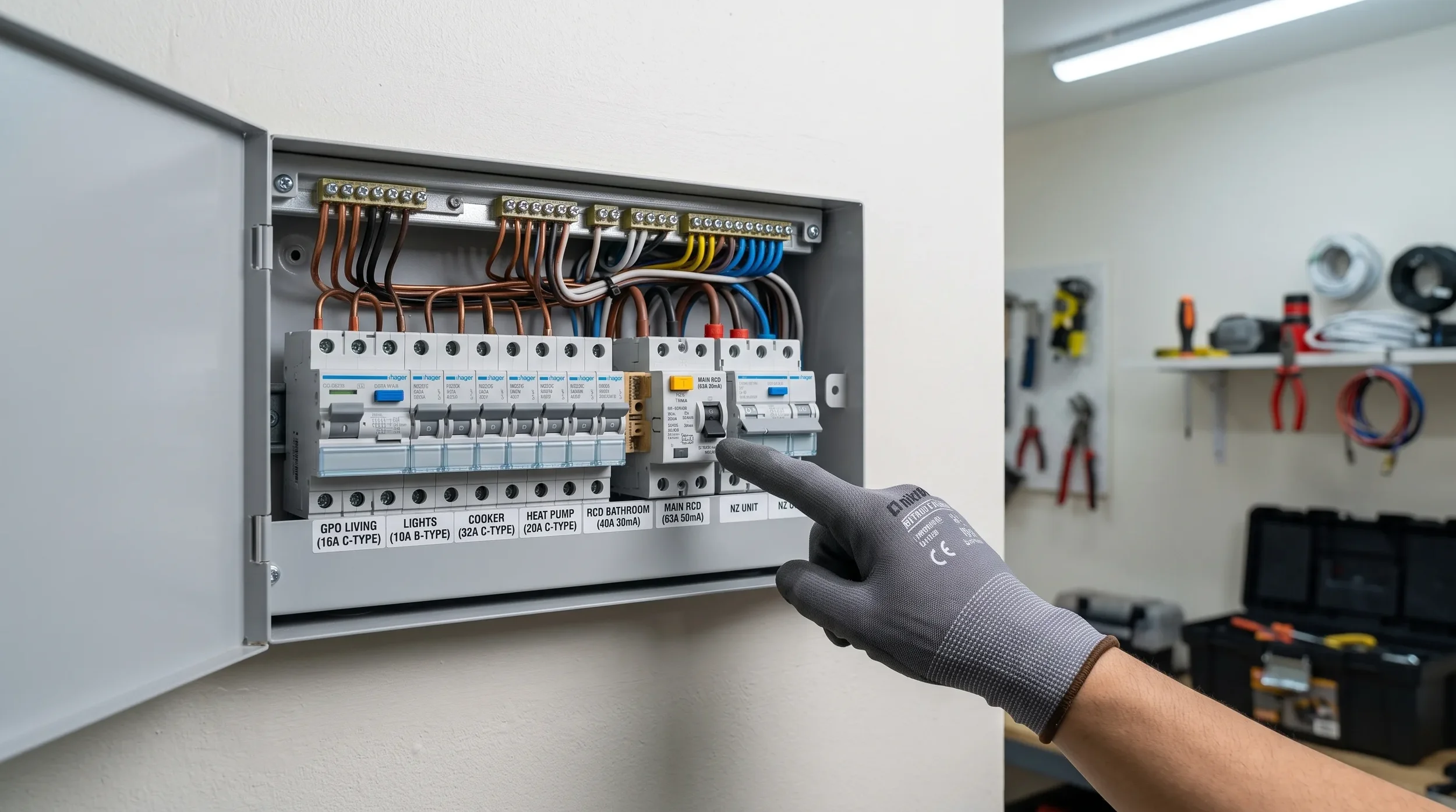
Is Your Home Breaking the Law Without You Knowing?
Here's an honest truth most electrical blogs won't tell you: thousands of homes across Nelson Tasman are still running on wiring that was perfectly legal the day it was installed — and is now years, sometimes decades, out of step with what the law actually requires. It's not because the homeowners have done anything wrong. It's because the rules around residual current devices (RCDs) have changed several times since the 1990s, and nobody sends you a letter when the goalposts move.
New Zealand's Wiring Rules have required RCDs on socket circuits since 1992, but full-home coverage for all final sub-circuits (including lighting) only became mandatory from the 2007 edition of AS/NZS 3000 onward.
Homes wired before that point are not automatically illegal to live in, but they don't meet today's installation standard — and that gap matters at sale, renovation, and insurance time.
The current cited standard in New Zealand is AS/NZS 3000:2007 (as amended), moving to AS/NZS 3000:2018 under the Electricity (Safety) Amendment Regulations 2025.
Nelson's older housing stock (pre-2007, and especially pre-1990s villas and bungalows) is the segment most likely to be under-protected.
A licensed electrician can check and upgrade your switchboard in a single visit — this isn't a full rewire.
Key Takeaways
Socket-circuit RCD protection has been required in NZ wiring rules since 1992; full sub-circuit coverage (including lighting) has been standard since 2007.
The currently cited standard is moving from AS/NZS 3000:2007 to AS/NZS 3000:2018 under 2025 amendment regulations.
Older wiring isn't automatically illegal, but any new work must meet today's standard.
Nelson's older housing stock — villas, bungalows, and coastal baches — is the segment most likely to be under-protected.
Upgrading is usually a switchboard-level job, not a full rewire, and ends with a Certificate of Compliance.
What RCD Protection Actually Covers
An RCD is the small switch on your switchboard that watches for electricity leaking somewhere it shouldn't — through a person, a damp wall, or a damaged cable — and cuts the power in a fraction of a second. That's the mechanical side, and if you've read a general electrical safety article before, you've probably seen this explained already.
What most articles skip is the part that actually matters for New Zealand homeowners right now: whether your home is legally required to have this protection, when that requirement changed, and what it means if your house predates the current rules. That's the gap this guide fills. We're going to walk through the compliance timeline in plain English, show you how to work out where your own home sits on it, and explain what a Nelson-based licensed electrician can realistically do about it.

Does Every NZ Home Legally Need RCD Protection?
Yes — but the requirement applies from the point your home was last wired or rewired, not retroactively to every property built before the rule existed. New Zealand's Wiring Rules first required RCDs for household socket-outlet circuits back in 1992, following Australia's lead, though early New Zealand practice limited the requirement to sockets in wet areas like bathrooms and laundries. Full-home coverage — meaning every final sub-circuit, including lighting — became the standard from the 2007 edition of AS/NZS 3000, largely driven by a string of deaths where people were electrocuted running cables and staples through live wiring during insulation retrofits.
Under the Electricity (Safety) Regulations 2010, all fixed wiring must comply with the version of AS/NZS 3000 cited in the regulations at the time the work was carried out. As of the 2025 amendment regulations, that cited standard moved from AS/NZS 3000:2007 to AS/NZS 3000:2018. In practice, this means:
Homes wired or fully rewired after 2007 should already have RCDs across all final sub-circuits.
Homes wired between 1992 and 2007 likely have RCDs on socket outlets only, and possibly only in wet areas.
Homes wired before 1992, common across Nelson's older villas, bungalows, and 1960s–80s housing stock, may have no RCD protection at all unless work has been done since.
None of this makes an older home "illegal" to occupy as-is. The rule applies to new work, alterations, and switchboard replacements — not retrospectively to untouched original wiring. But it does mean the safety margin in an older Nelson home can be meaningfully lower than in a newer build, and that gap becomes directly relevant the moment you renovate, sell, or apply for a Certificate of Compliance on any new circuit.
Why This Matters More in Nelson and Tasman Specifically
Nelson's housing stock skews older than the national average in several suburbs, with a strong mix of early-to-mid-20th-century villas, 1970s–80s brick-and-tile homes, and coastal baches around Tasman Bay that were often wired to a lower standard for occasional or holiday use. Add in the region's damp winters and coastal humidity, and you get a combination that raises the stakes: older wiring, more moisture exposure, and a real chance that any given circuit predates the point RCDs became standard practice. It's also why RCD protection tends to come under the most strain during Nelson's wetter winter months, when moisture ingress is most likely to trip an ageing or under-specified circuit. If your home falls into this older category more broadly, our roundup of the top electrical safety upgrades for older Nelson homes is a useful companion read.
If you're planning a renovation, adding a heat pump, or upgrading a switchboard anywhere in Nelson Tasman, the new or altered circuit must meet the currently cited standard — even if the rest of the house is untouched. This is one of the most common surprises we see: a homeowner budgets for a straightforward switchboard upgrade and discovers mid-job that full RCD coverage is now part of getting a Certificate of Compliance signed off.
It's also worth knowing that the rule change wasn't a bureaucratic tidy-up. New Zealand's shift to full sub-circuit protection in 2007 followed a run of preventable deaths where people renovating their own homes — often adding insulation — put a staple or nail through a live cable hidden in a wall or ceiling. Socket-only protection, the earlier standard, did nothing to help in those cases, because the fault happened on a lighting or fixed-wiring circuit that had no RCD at all. That history is part of why lighting circuits, so often overlooked, are now treated as seriously as socket outlets under the current rules.
How to Work Out Where Your Own Home Sits on the Timeline
You don't need an electrician on-site to get a rough read on your own situation. A few quick checks will tell you which era your wiring most likely belongs to:
Look for test buttons. Open your switchboard and check for small switches marked "T" or "Test" alongside your circuit breakers. If you see none at all, your home almost certainly predates the socket-circuit requirement from 1992. If you see one or two covering only some circuits, you're likely in the 1992–2007 window, where wet-area or socket-only protection was common.
Check your last Certificate of Compliance. If you've had any electrical work done — a new power point, a switchboard swap, a renovation — ask your electrician or check your property file for the CoC date. Work certified after 2007 should already include full sub-circuit RCD coverage.
Consider your home's build era. Nelson's classic villas and bungalows, along with many 1960s–80s brick-and-tile homes, were typically wired to whatever standard applied at construction and have often had only minor, piecemeal electrical work since. If your house hasn't been rewired or had a switchboard upgrade in the last 15–20 years, treat the pre-2007 scenario as the safer assumption.
None of these checks replace a proper assessment, but they'll tell you whether a call to a licensed electrician is worth making sooner rather than later.

What Happens If Your Home Isn't RCD Protected
There's no roving inspector checking every Nelson switchboard, so an under-protected home won't trigger enforcement on its own. Where it does become a live issue:
Selling your home. A building inspection or LIM report will typically flag the absence of RCD protection, and buyers increasingly ask about it directly. It rarely stops a sale, but it does become a negotiating point.
Renovating or extending. Any new circuit, switchboard replacement, or significant alteration must meet the currently cited AS/NZS 3000 standard, which means RCD protection is added to the work regardless of what the rest of the house has.
Insurance claims. Insurers don't usually mandate RCDs outright, but a documented electrical fault linked to missing protection can complicate a claim, particularly after fire or water damage.
Everyday safety. This is the one that matters day to day. RCDs are one of the few devices in your home that can prevent a fatal shock in real time, and lighting circuits — the ones most likely to be unprotected in a pre-2007 home — are exactly where DIY renovation mishaps (like a nail or staple through a cable) tend to happen. If you've never had a look, our guide to spotting unsafe electrical outlets in older homes covers the other warning signs worth checking alongside your RCD coverage.
What a Compliance-Focused RCD Upgrade Looks Like
The good news is that closing this gap rarely means a full rewire. For most Nelson homes, a licensed electrician can assess your existing switchboard and, in many cases, add or upgrade RCD protection in a single appointment. The typical process looks like this:
Switchboard assessment. We check how your circuits are currently split, whether any RCDs are already present, and whether your board has room for additional units or needs a broader switchboard upgrade to accommodate them safely. On older Nelson properties, this is also when we check for outdated switchboard materials, including the asbestos backing boards still found behind some pre-1980s consumer units.
Circuit mapping. Under current rules, lighting circuits should be split across at least two RCDs, so if one trips, you're not left in total darkness. This is a detail that's easy to miss with a rushed or budget installation.
Certification. Once the work is complete, you'll receive a Certificate of Compliance confirming the upgraded circuits meet the currently cited standard. If you've never seen one of these before, our guide to what a Certificate of Compliance actually covers is worth a read.
If you're weighing this against a bigger project, our comparison of full house rewires versus targeted repairs breaks down when each approach makes financial sense.
Key Benefits of Getting This Right Now
Closes the single biggest safety gap in pre-2007 New Zealand wiring, with minimal disruption to your home.
Protects your position at sale time, removing a common negotiating point before it comes up.
Keeps future renovations simple, since compliant circuits don't need to be revisited when you extend or upgrade later.
Costs far less than people assume — this is typically a switchboard-level job, not a full rewire. Our Nelson electrician pricing guide gives a general sense of what to budget for.
Ready to Find Out Where Your Home Stands?
You don't need to guess which era your wiring falls into or second-guess a home inspection report. A Mako Electrical switchboard assessment tells you exactly what's protected, what isn't, and what it would take to bring your circuits up to the current standard — with a clear, itemised quote before any work starts. If you're not sure where to begin, our guide on prioritising RCD installation in older NZ homes is a good next stop, and if it's simply been a while since anyone tested your existing RCDs, our 60-second RCD testing guide shows you how to check them yourself today. Prefer to have someone else run the checks? Our pre-season switchboard inspection service covers RCD compliance as part of a full board health check. Get in touch with our licensed Nelson team to book an assessment.
Closing the Gap Between "Built to Code" and "Compliant Today"
Your home being older than the current Wiring Rules doesn't make it dangerous by default, and it doesn't make you responsible for a retrofit you were never told about. But it does mean the protection your family relies on every day may be sitting on a standard from three decades ago. Understanding exactly where your home sits on that timeline is the first step — and it's one a licensed Nelson electrician can answer for you in a single visit, with no guesswork involved.
Frequently Asked Questions
-
Only new wiring, alterations, and switchboard replacements must meet the current RCD requirement. Untouched original wiring in an older home isn't automatically illegal, but it won't meet today's standard, which becomes relevant at renovation, sale, or Certificate of Compliance time.
-
Socket-outlet RCD protection was introduced in the 1992 Wiring Rules, initially applied narrowly to wet areas in NZ practice. Full protection for all final sub-circuits, including lighting, became standard from the 2007 edition of AS/NZS 3000 onward.
-
There's no blanket retrofit requirement for untouched wiring. However, any renovation, extension, or switchboard replacement triggers the current standard for that circuit, which is when most Nelson homeowners end up adding full RCD coverage.
-
It's unlikely to block a sale, but building inspections and LIM reports commonly flag missing RCD protection, and buyers often raise it during negotiations. Addressing it beforehand removes a predictable sticking point.
-
Current practice requires lighting circuits to be split across at least two RCDs so a trip doesn't leave the whole home dark, alongside RCD-protected socket and appliance circuits. The exact count depends on your switchboard's circuit layout.
-
No. Any new or altered circuit inspected for a Certificate of Compliance must meet the currently cited AS/NZS 3000 standard, which includes RCD protection. Work that skips this won't pass sign-off.
-
There's no rental-specific RCD law separate from general electrical safety rules, but landlords must comply with all building and health-and-safety requirements under the Residential Tenancies Act, which includes wiring that meets the standard in force for any work carried out.
-
Costs vary with your switchboard's age and circuit layout, but most homes need a switchboard-level upgrade rather than a full rewire. A licensed electrician can give you an itemised quote after a short on-site assessment.
-
A circuit breaker protects your wiring from overload and short circuits. An RCD protects people, detecting tiny current leaks — like electricity passing through a person — and cutting power before a shock becomes fatal.
-
Manufacturers and NZ guidance recommend pressing the test button every three months to confirm the mechanism trips correctly. This is a homeowner check, separate from any formal electrical inspection.
